
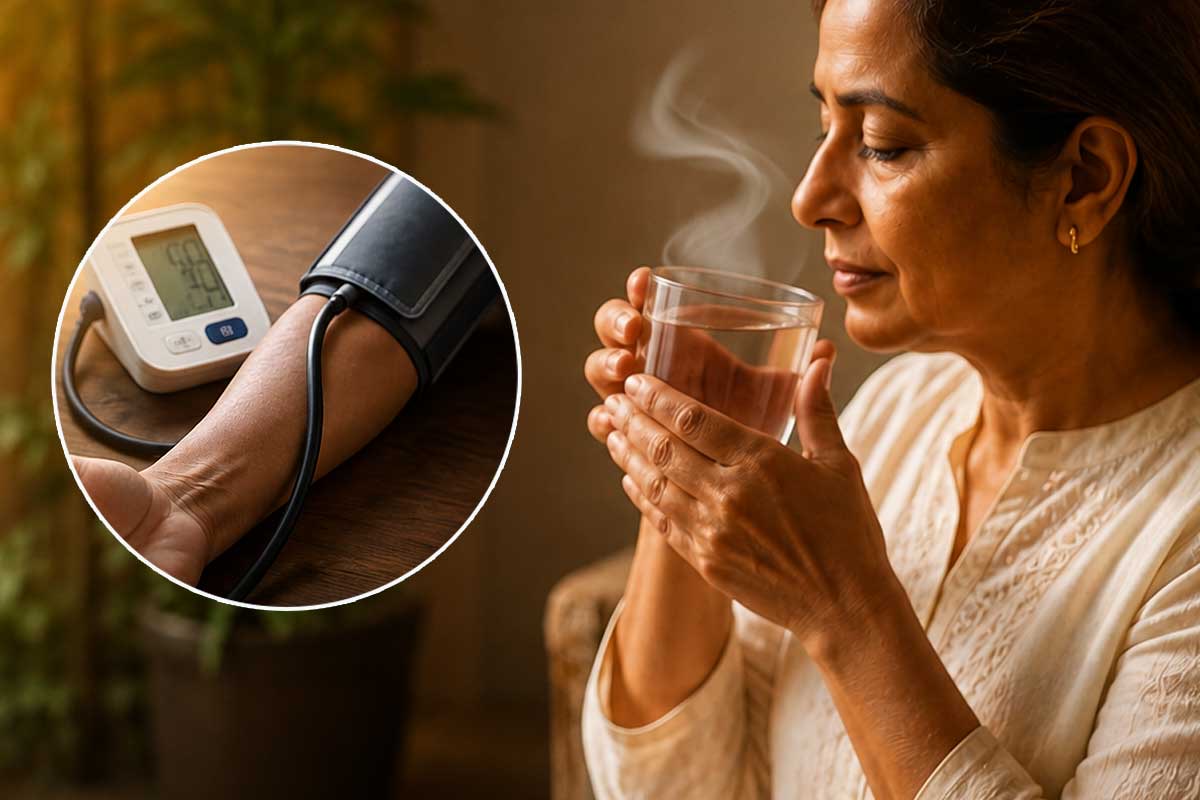

Social media is full of claims that drinking warm water regularly can lower blood pressure and may even replace medication. However, health experts caution that this is not a proven treatment for hypertension.
Drinking warm water may cause temporary changes in the body. Heat can help blood vessels relax and expand slightly, a process known as vasodilation. Adequate hydration is also important for normal kidney function and circulation. As a result, blood pressure may show a small, short-term change in some people. But there is no reliable evidence that drinking warm water can control chronic high blood pressure.
Stopping prescribed blood pressure medication and relying only on warm water can be dangerous. Hypertension can have several causes, including genetics, excess weight, high salt intake, reduced physical activity, kidney-related problems and changes in blood vessel function. Untreated high blood pressure can increase the risk of heart disease, stroke and kidney complications.
Heat therapy is a different matter. Some research suggests that controlled exposure to heat, including warm-water immersion, may temporarily reduce blood pressure. A review of studies has reported modest reductions following heat-based treatments. However, these findings cannot be directly applied to drinking warm water.
Hot baths also require caution, particularly for people with heart conditions, low blood pressure, frequent dizziness or those taking medicines that widen blood vessels.
For long-term blood pressure control, experts recommend proven measures such as reducing salt intake, exercising regularly, maintaining a healthy weight, eating more fruits, vegetables and fibre, avoiding smoking and excessive alcohol, managing stress and taking prescribed medicines consistently.
Warm water may provide comfort, but it is not a substitute for hypertension treatment.