A New World Order Takes Shape
United Nations echoes India’s demand for a more representative global governance system.
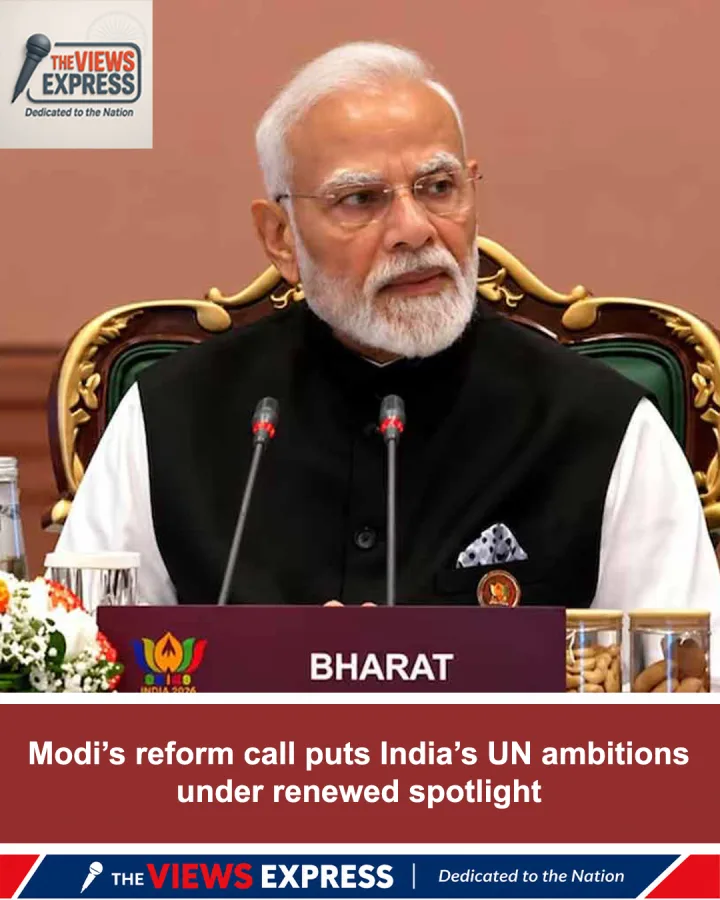
Prime Minister Narendra Modi’s demand for urgent reform of the United Nations Security Council has received strong backing from the world body, bringing renewed attention to India’s long-standing bid for permanent membership. Speaking at the BRICS platform, Modi argued that the existing global governance structure no longer reflects the realities of the twenty-first century.
Addressing world leaders, including Russian President Vladimir Putin and Chinese President Xi Jinping, Modi called for the transformation of the existing “power pyramid” into a partnership-based system that gives every nation a meaningful voice. He stressed that reforming the Security Council could no longer be postponed.
The United Nations subsequently echoed that position. Stéphane Dujarric, spokesperson for Secretary-General António Guterres, said the UN chief had consistently supported fundamental reform of the Security Council and other international institutions. He noted that the current arrangement, with only five permanent members, does not adequately represent today’s world.
Dujarric emphasised that global institutions must reflect the realities of 2026 rather than those of 1945. Such reforms, he said, are essential to making international bodies more representative and effective.
The Security Council’s permanent members are China, France, Russia, the United States and the United Kingdom. India has long sought a permanent seat, supported by arguments over its population, economic influence and growing diplomatic role.
UN backing could strengthen international pressure for change, although membership reform requires complex negotiations and broad agreement among nations. A permanent seat would potentially give India veto power, significantly enhancing New Delhi’s influence in global security decisions.