
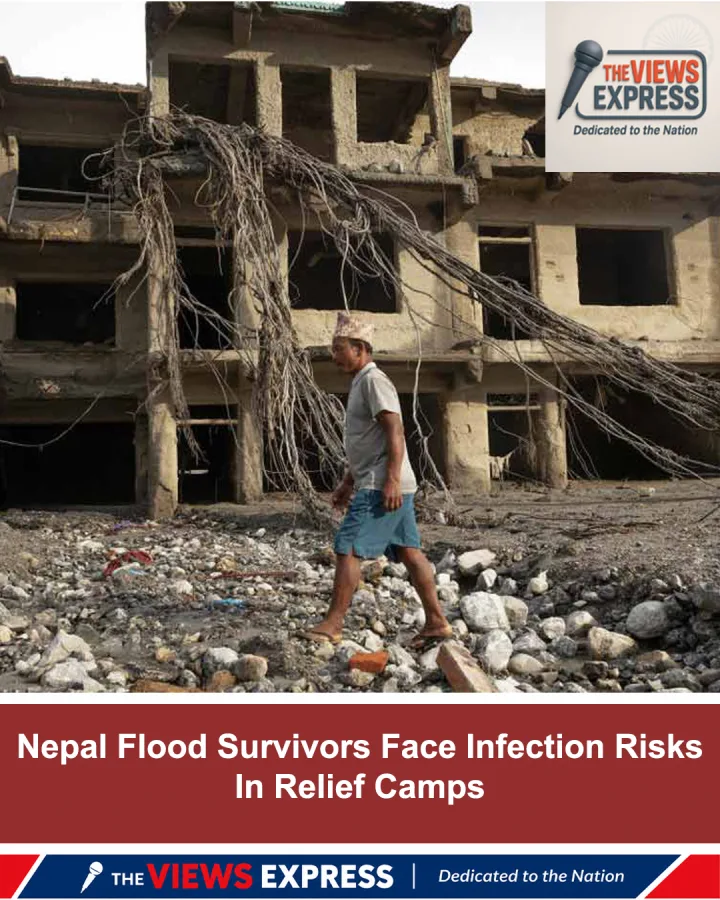

KATHMANDU: Ten days after devastating flash floods swept through parts of Nepal, survivors sheltered in relief camps are facing a fresh threat: the growing risk of disease and infection. Vast stretches of the affected areas remain covered in debris, while decomposing human and animal remains continue to be recovered, raising serious public-health concerns.
By Saturday morning, 1,287 bodies had reportedly been recovered, while nearly 5,500 people remained missing. Authorities fear that unrecovered bodies, animal carcasses and organic waste could contribute to the spread of infections, particularly in areas where stagnant water, mud and poor sanitation have created favourable conditions for contamination.
At relief camps in areas such as Devighat, survivors are receiving essential supplies including rice, lentils, bread, drinking water and blankets. Relief cards are also being issued, allowing affected families to receive food and other necessities for the coming months.
However, authorities are urging officials and relief agencies to take particular care with food storage and distribution. Flies and decomposing waste around camps have added to fears that contaminated food or water could trigger outbreaks.
For survivors, the immediate priority remains staying alive. But a second struggle is already emerging—the challenge of rebuilding homes, livelihoods and communities destroyed by the floods.
Many families have lost houses, livestock, savings and businesses. Children, meanwhile, remain out of school as some school buildings have been converted into temporary shelters.
As Nepal battles the aftermath of the disaster, survivors now face a difficult double challenge: avoiding disease today and finding a way to rebuild tomorrow.