
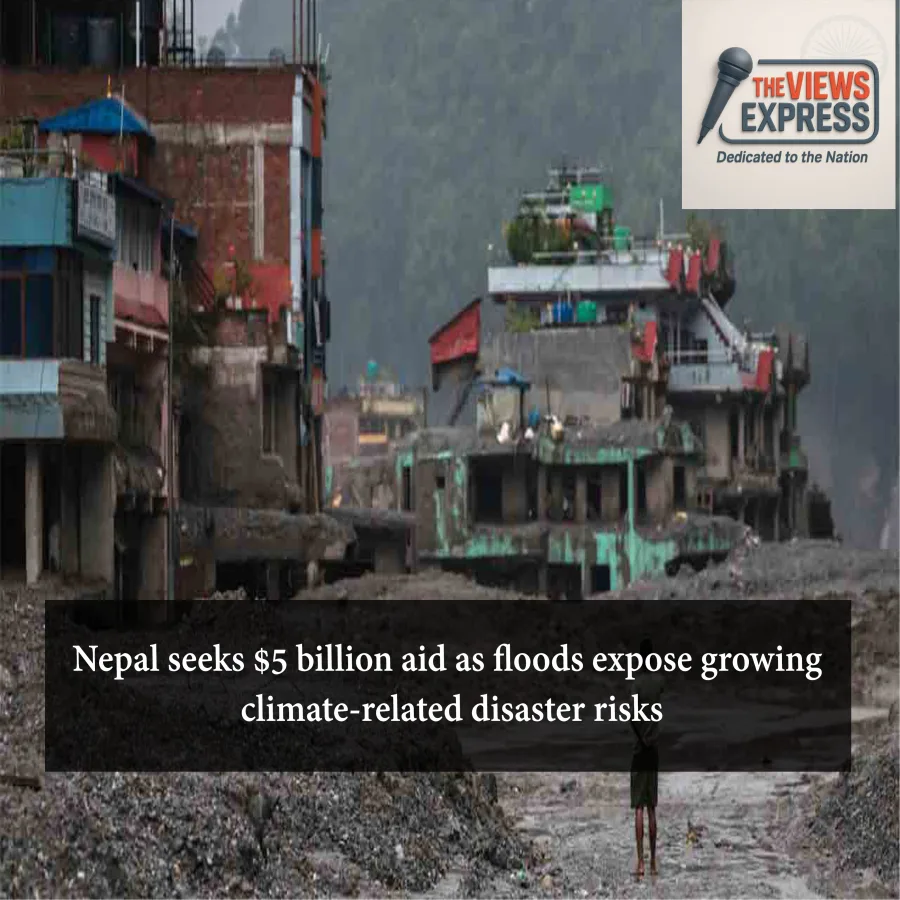

Nepal has blamed human-induced climate change for the devastating flash floods that struck the country last week, arguing that greenhouse gas emissions from wealthy nations are worsening the vulnerability of developing countries. Kathmandu has estimated that at least $5 billion will be required to rebuild damaged infrastructure and support recovery.
The Nepalese government is seeking urgent assistance from a United Nations fund created to help vulnerable nations cope with climate-related disasters. Authorities say the scale of destruction has highlighted the growing financial challenges faced by countries that contribute relatively little to global greenhouse gas emissions.
According to Nepal’s disaster management authorities, 939 bodies had been recovered by Monday evening, while 11,379 people had been rescued. As many as 3,925 people were still reported missing, with hopes of finding survivors declining as rescue operations continued.
India has also said that 158 Indian nationals were rescued by Monday night following the disaster.
Maheshwar Dhakal, head of Nepal’s climate change division under the Environment Ministry, attributed the disaster partly to human-driven climate change. He argued that countries responsible for the largest historical greenhouse gas emissions must bear greater responsibility for helping vulnerable nations recover.
The issue of climate-related compensation has been debated internationally for years. A UN climate fund was agreed upon in 2023, but concerns remain over inadequate contributions from wealthy countries. So far, countries have pledged around $820 million to the fund, while requests for financial assistance have reportedly reached billions of dollars.
Former board vice-chair Richard Sherman said Nepal could potentially receive around $20 million, although he acknowledged that amount would be far below what the country needs.