
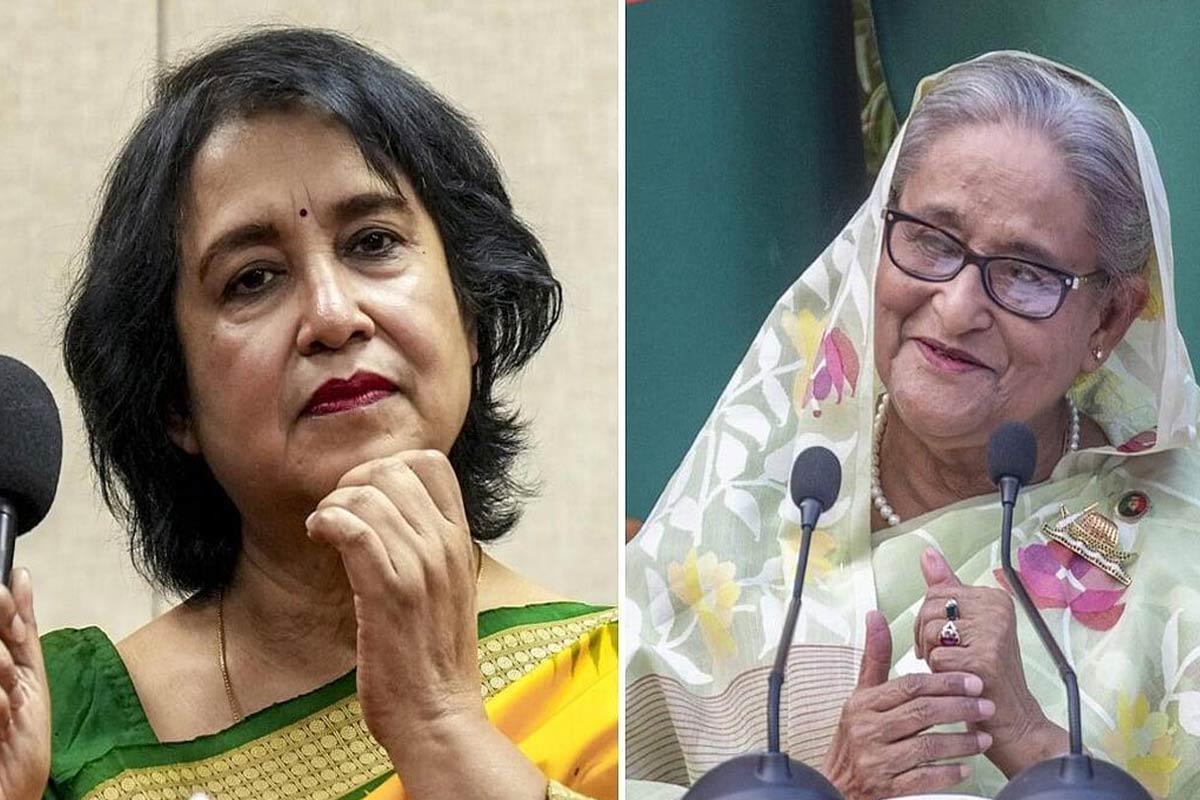

Bangladesh's turbulent political landscape has unexpectedly drawn comparisons between two of its most prominent women—former Prime Minister Sheikh Hasina and writer Taslima Nasrin. Despite representing vastly different worlds of politics and literature, both now share a common reality: exile from their homeland under extraordinary security arrangements.
Sheikh Hasina, daughter of Bangladesh's founding leader Sheikh Mujibur Rahman, remains outside Bangladesh following dramatic political upheaval that forced her from office. While she continues to express hope of returning to her country, legal and political uncertainties have kept that possibility out of reach.
Taslima Nasrin, internationally known for her outspoken criticism of religious extremism and advocacy for freedom of expression, has spent decades living away from Bangladesh after facing severe threats over her writings. India has long provided her refuge, allowing her to continue her literary work despite persistent controversy.
Though both women are Muslims, their situations challenge conventional political narratives surrounding migration, asylum, and identity in South Asia. Their cases have resurfaced amid debates over citizenship, border policies, and refugee issues, making their personal journeys symbols of broader regional discussions.
The similarities, however, largely end there. Hasina remains deeply connected to Bangladesh's political future and has repeatedly indicated her desire to return. Nasrin, by contrast, has built much of her life abroad, focusing on literature and human rights rather than political office.
Their parallel stories reflect how political conflict, ideological divisions, and religious extremism can shape individual destinies in unexpected ways. In a deeply polarized society, the experiences of Hasina and Nasrin continue to spark debate on democracy, exile, security, and the enduring impact of political upheaval across the region.