
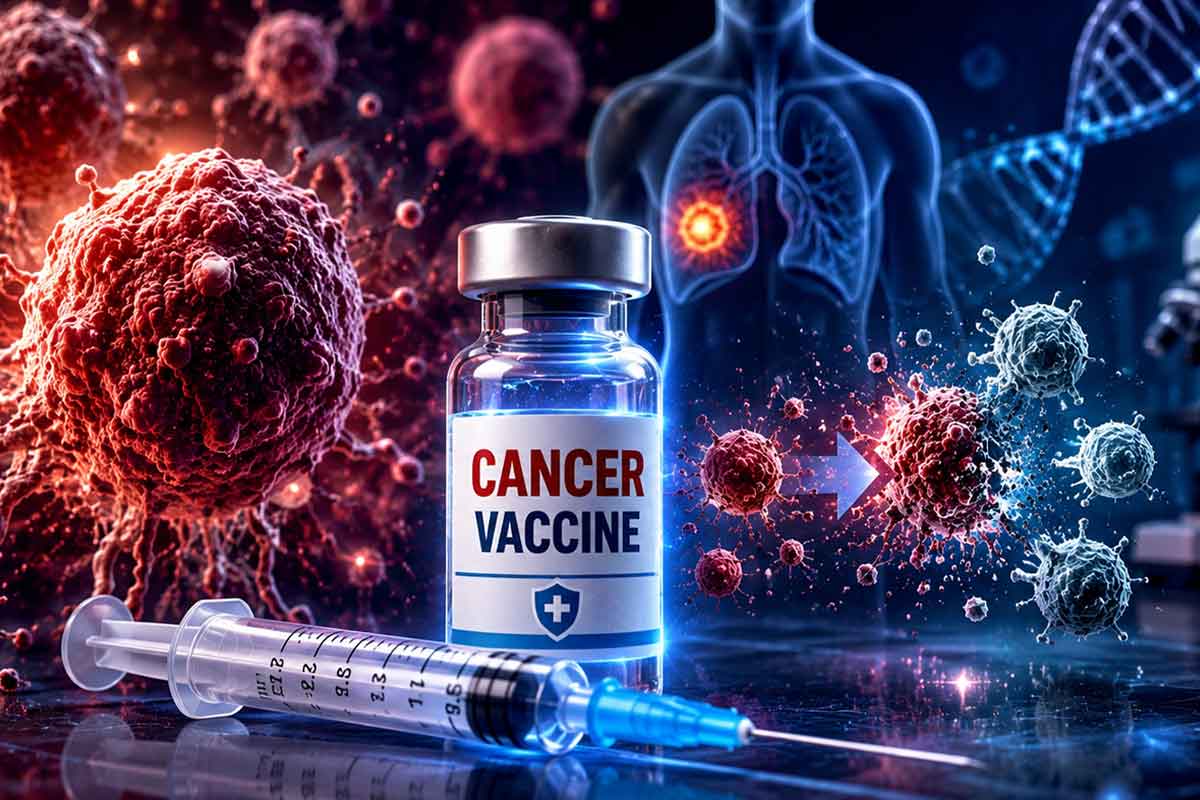

A new personalised cancer vaccine developed by Moderna and Merck has shown encouraging results in clinical testing, raising hopes of reducing the risk of cancer returning after treatment. However, experts caution that the vaccine is still under investigation and is not yet a routine treatment available to the general public.
The vaccine has primarily been tested in patients suffering from melanoma, an aggressive form of skin cancer. In trials, it was administered alongside Keytruda, a widely used cancer immunotherapy. According to the companies, patients with advanced melanoma and high-risk disease showed promising responses to the combination.
The vaccine uses mRNA technology and is designed to be personalised for individual patients. Researchers aim to train the immune system to recognise cancer-specific characteristics and attack remaining cancer cells before they can grow or spread. The approach could potentially reduce the risk of recurrence and metastasis after a tumour has been removed.
The combination of the vaccine and Keytruda appeared to strengthen the body's immune response, according to preliminary findings. Researchers are now studying whether the technology can eventually be adapted for cancers affecting other parts of the body.
The development comes amid growing global research into personalised cancer vaccines. Russia's Gamaleya Research Institute has also reported encouraging early findings from its melanoma vaccine programme, with researchers saying the treatment generated an immune response capable of targeting tumours and metastases.
Despite the excitement, larger and longer-term clinical trials are necessary to establish the vaccine's effectiveness, safety and durability. Scientists will also need to determine which patients are most likely to benefit before widespread use can be considered.