
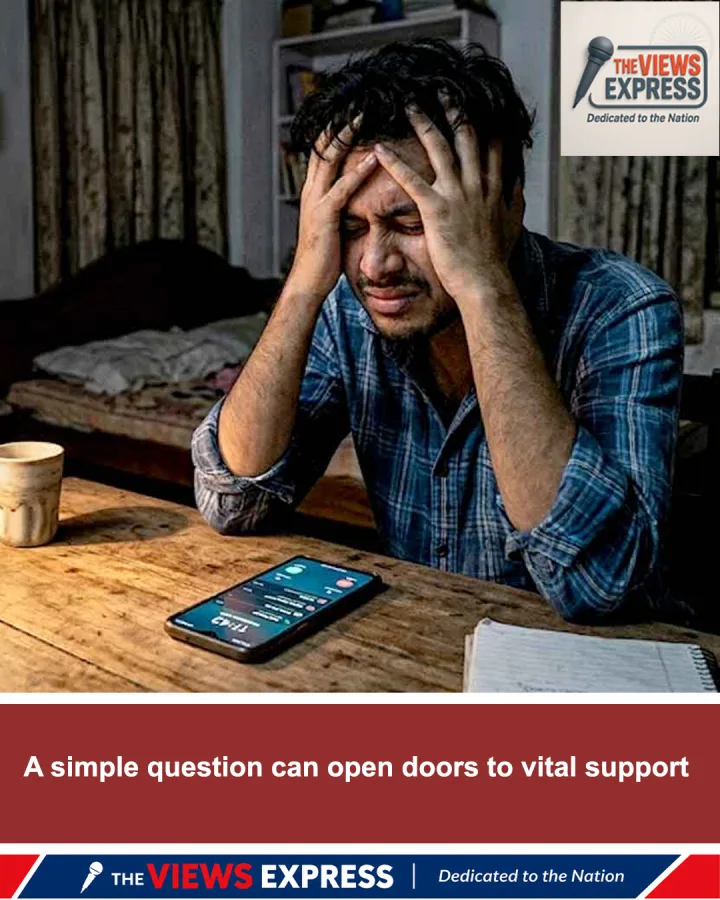

Suicide prevention often begins with something simple: asking someone, “Are you okay?” A person may appear to be living normally—attending school or work, meeting friends, spending time with family and remaining active on social media—while privately struggling with loneliness, hopelessness, helplessness or overwhelming emotional pressure.
Experts say that changes in behaviour and communication can sometimes signal serious psychological distress. Warning signs may include withdrawing from family and friends, losing interest in activities once enjoyed, changes in sleep or eating patterns, unusual anger or irritability, difficulty concentrating on studies or work, or repeatedly expressing feelings of hopelessness.
Statements such as “I am a burden” or “Everyone would be better without me” should never be dismissed as attention-seeking or temporary moodiness. Such comments may reflect deep emotional pain. Similar changes among teenagers should also be taken seriously, particularly when linked to academic pressure, bullying, relationship difficulties, family conflict or constant comparison on social media.
Experts also stress that directly asking someone whether they are thinking about suicide does not put the idea into their mind. Instead, it can reassure them that someone notices their suffering and is willing to listen. Listening without judgement is crucial, while dismissive advice or comparisons should be avoided.
If someone indicates that they may harm themselves, they should not be left alone. Immediate professional mental-health or emergency support should be sought, while trusted family members or others close to them should be informed. Suicide prevention is a shared responsibility, and timely conversation, support and professional care can save lives.