
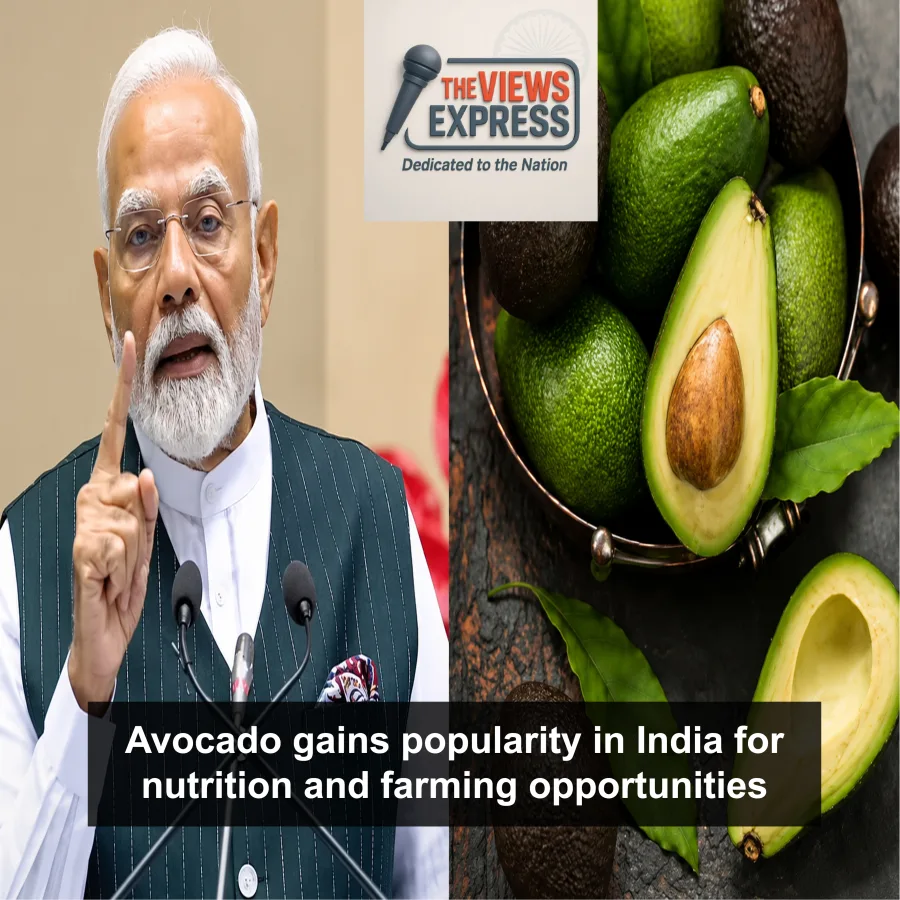

Avocado is rapidly gaining popularity in India, moving from niche health-food menus to everyday diets. Prime Minister Narendra Modi recently highlighted the fruit’s growing appeal, while also pointing to its potential to create new income opportunities for farmers.
During the 137th episode of Mann Ki Baat, Modi discussed the increasing cultivation and consumption of avocados in India. He later mentioned the fruit in a social media video, drawing attention to both its nutritional benefits and agricultural potential.
Avocado stands apart from most fruits because it contains relatively little natural sugar and is rich in healthy fats, particularly monounsaturated fatty acids. It also provides dietary fibre, potassium, folate, magnesium, vitamin K and vitamin E.
Its combination of healthy fats and fibre may support heart health and help maintain healthy cholesterol levels. A long-term study involving more than 100,000 people found that consuming at least one avocado a week was associated with lower risks of cardiovascular disease and coronary heart disease. However, avocado is not a substitute for medical treatment, and overall diet, exercise, sleep and weight management remain important.
The fruit is also calorie-dense, making portion control important. Around 70–100 grams a day can fit into a balanced diet, while those trying to lose weight should include its calories in their daily intake.
Avocado can be eaten raw in salads or smoothies. Avoiding excessive sugar, cheese, butter and other high-calorie additions can preserve its nutritional advantages.
Beyond nutrition, avocado cultivation is creating new opportunities for Indian farmers. Growers in Andhra Pradesh, Tamil Nadu and Karnataka are experimenting with the crop, including intercropping with coffee and pepper. Cultivation is also expanding in parts of Maharashtra, Sikkim, Mizoram and Manipur.
With nutritional appeal and growing agricultural demand, avocado is emerging as both a health-conscious food choice and a promising commercial crop in India.