
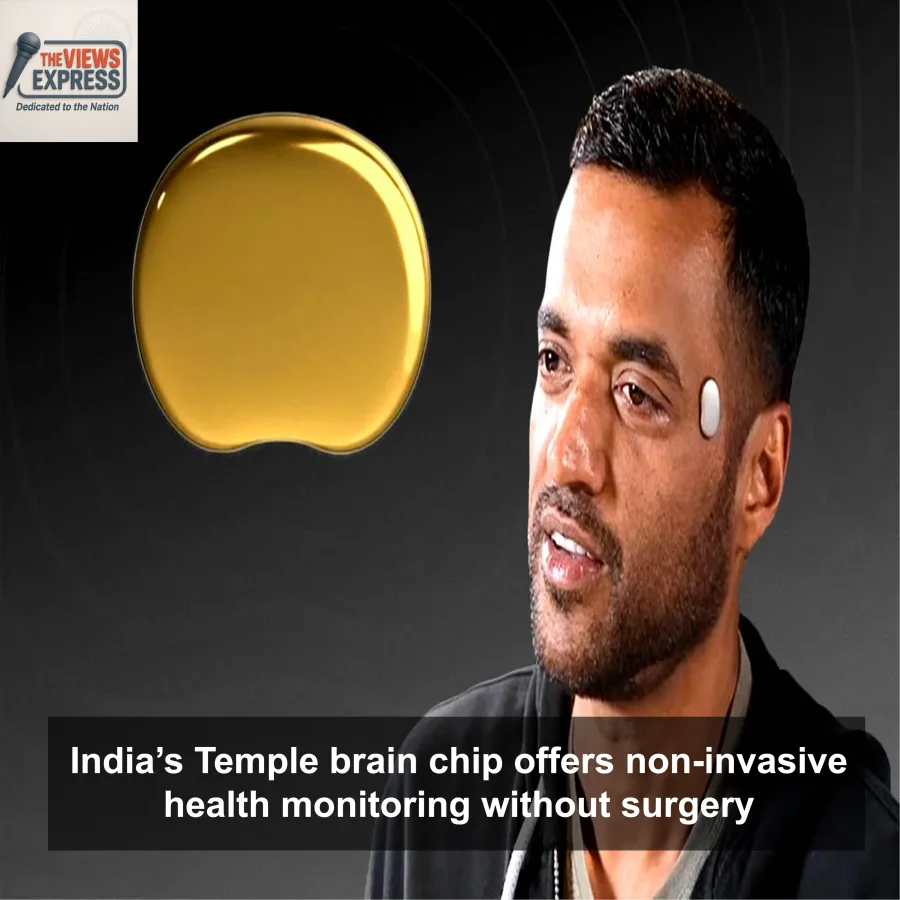

India is developing a new wearable brain-monitoring device called “Temple”, which aims to read signals from the brain without requiring surgery. The technology is being developed by Temple, a startup associated with Zomato founder Deepinder Goyal, and is currently undergoing experimental testing.
Unlike Neuralink’s brain-computer interface, which requires a surgical procedure to implant a chip inside the brain, Temple is designed to be attached externally near the forehead. Its developers claim the device could analyse brain signals and provide insights into several aspects of a person’s health.
According to Goyal, Temple is being designed as a more advanced alternative to conventional fitness trackers and smartwatches. The device is expected to monitor heart activity, brain signals and energy expenditure, while potentially identifying warning signs associated with certain health risks.
The technology is also expected to feature an “entropy tracking” system, measuring how the body uses energy. Its proposed resting entropy and maximum entropy measurements could provide information about energy consumption during rest and physical activity. The latter could be particularly useful for athletes.
Temple may also track changes in heart activity during sleep, meditation, exercise and other activities. Its developers believe the technology could eventually assist in monitoring neurological conditions and detecting potential risks linked to heart attacks, strokes, Parkinson’s disease and Alzheimer’s.
However, the device remains under development, and its health-monitoring claims will require extensive scientific and clinical validation before they can be considered established medical capabilities.
Temple could reportedly enter the Indian market later this year, with an expected price of around ₹80,000 to ₹1 lakh.