
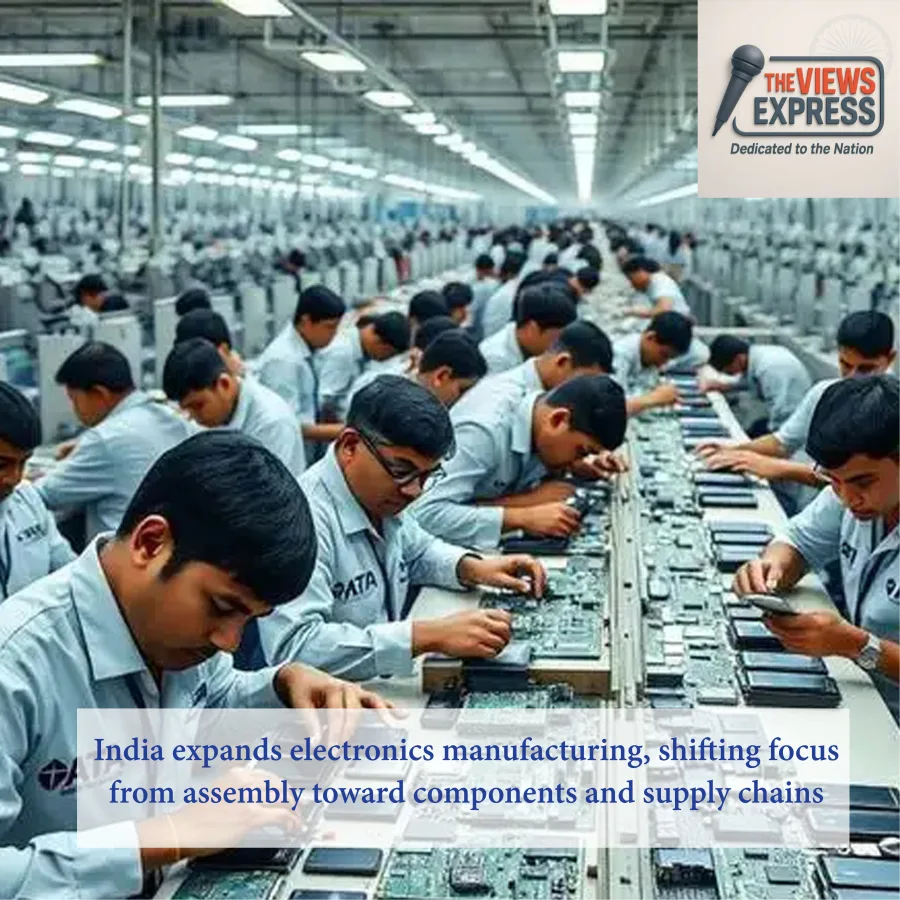

India’s electronics manufacturing ambitions are entering a new phase, with policymakers increasingly focusing on building a domestic ecosystem for components, materials and manufacturing equipment. The Electronics Component Manufacturing Scheme (ECMS) is expected to play a key role in reducing the industry’s dependence on imported inputs while strengthening India’s position in global supply chains.
For years, India’s electronics growth has been driven largely by assembly operations, particularly in smartphones and consumer electronics. While this has helped expand production and exports, a significant share of the value-added components used in these products continues to come from overseas suppliers.
The ECMS aims to address this gap by encouraging investments in critical components and sub-assemblies. Support for areas such as displays, camera modules, printed circuit boards, semiconductor-related inputs and other specialised manufacturing could help create a broader supplier network.
Industry experts, however, say financial incentives alone may not be enough. India will also need reliable infrastructure, skilled workers, competitive logistics, access to technology and faster regulatory approvals. Building a strong supplier ecosystem could take years, particularly in sectors requiring high precision and significant capital investment.
A successful component manufacturing base could bring multiple benefits, including higher domestic value addition, greater export potential and reduced vulnerability to global supply disruptions. It could also help Indian manufacturers integrate more deeply into international production networks.
The challenge now is to ensure that policy support translates into sustainable, globally competitive companies rather than short-term capacity expansion. If implemented effectively, ECMS could help India move from being primarily an assembly destination to becoming a major electronics manufacturing hub.