
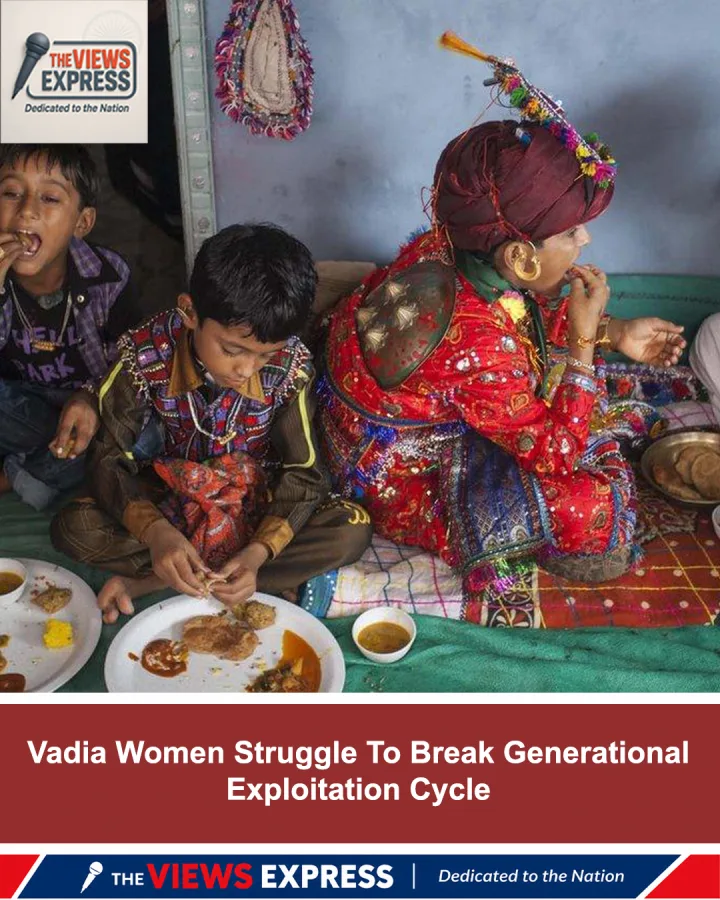

In Gujarat’s Banaskantha district, the small village of Vadia continues to grapple with a deeply entrenched cycle of poverty, child marriage and sexual exploitation. Home to around 750 people, the village has for years been associated with a community practice in which women have been pushed into the sex trade, while early marriage is often viewed as an alternative for girls.
According to accounts cited in the report, men from the village have traditionally approached truck drivers and travellers along the Palanpur-Tharad highway to find customers for women involved in the trade. Many families have struggled to escape the practice because of poverty and limited livelihood opportunities.
A 19-year-old woman from the village told PTI that her mother and grandmother had been sex workers. She said she was engaged at 11 and married at 18, while continuing her education in nursing. Another resident, Chandra Saraniya, said she entered the sex trade at 15 and later arranged her daughter’s early engagement because of pressure from the community.
The situation has also drawn intervention from non-governmental organisations. Mass marriage programmes, alternative livelihood projects and educational initiatives have helped several families move away from the traditional occupation. Of around 160 families, nearly 90 have reportedly agreed to leave the trade.
Activists say poverty, social stigma and inadequate economic opportunities remain major challenges. The Saraniya community, to which many residents belong, is traditionally associated with a nomadic history.
Vadia’s struggle reflects the complex social and economic barriers facing women and girls seeking education, safety and independent livelihoods.