
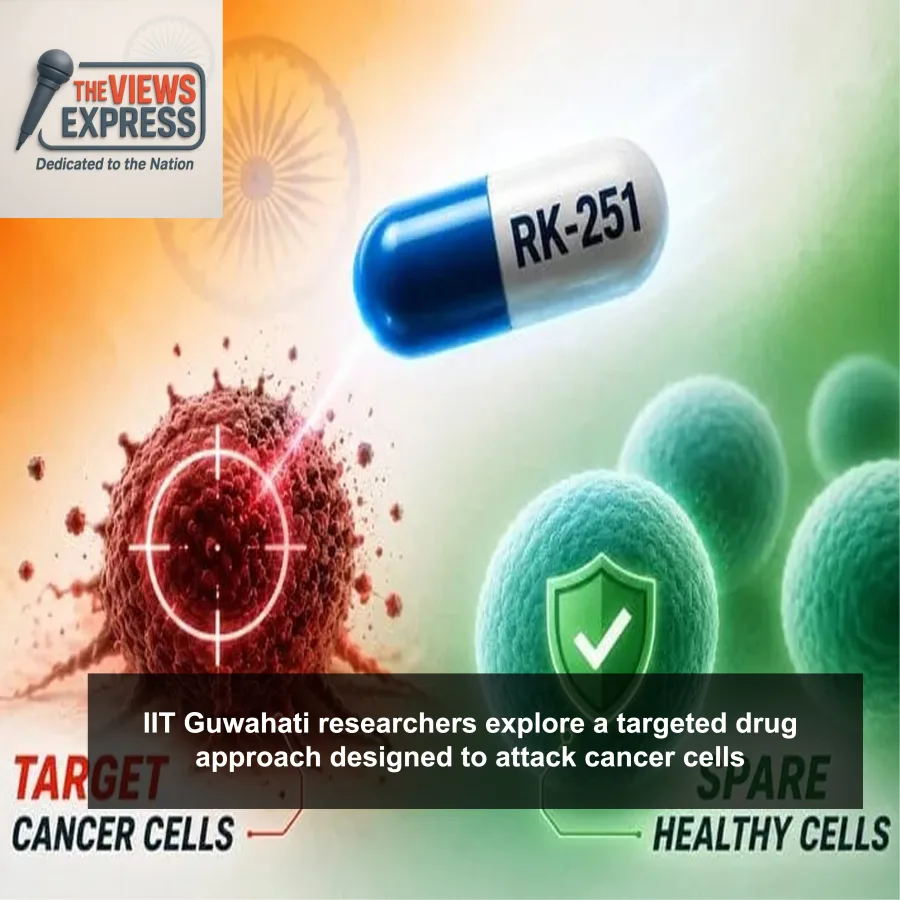

Researchers from IIT Guwahati and the Institute of Advanced Study in Science and Technology (IASST) have developed a promising experimental drug designed to selectively target and destroy cancer cells, potentially reducing some of the harmful effects associated with conventional chemotherapy.
The drug, named RK-251, is currently at the research stage and has not yet been established as a replacement for chemotherapy or radiotherapy. Researchers say its proposed mechanism could allow it to remain inactive inside the body until it encounters cancer cells, where it would become activated.
The approach focuses on TAK1, a protein associated with cancer-cell survival, growth and resistance to treatment. Researchers believe targeting this protein could weaken the protective mechanisms that help malignant cells survive chemotherapy and radiotherapy.
According to the research concept, RK-251 is designed to disrupt the cancer cell’s protein machinery and release an anti-cancer chemical called NBDHEX. The compound is expected to interfere with cancer-cell survival and multiplication, potentially helping destroy malignant cells while limiting damage to surrounding healthy tissue.
Conventional chemotherapy can affect both cancerous and healthy rapidly dividing cells, often causing significant side effects. A treatment capable of selectively attacking malignant cells could therefore represent an important advance in cancer therapy.
Researchers believe RK-251 may eventually have applications in difficult cases, including cancers that have spread extensively or situations where conventional treatment becomes ineffective or difficult for patients to tolerate.
However, the drug remains experimental. Extensive laboratory studies, animal testing and human clinical trials will be required to establish its safety, effectiveness, appropriate dosage and long-term benefits before it can be considered for routine cancer treatment.