
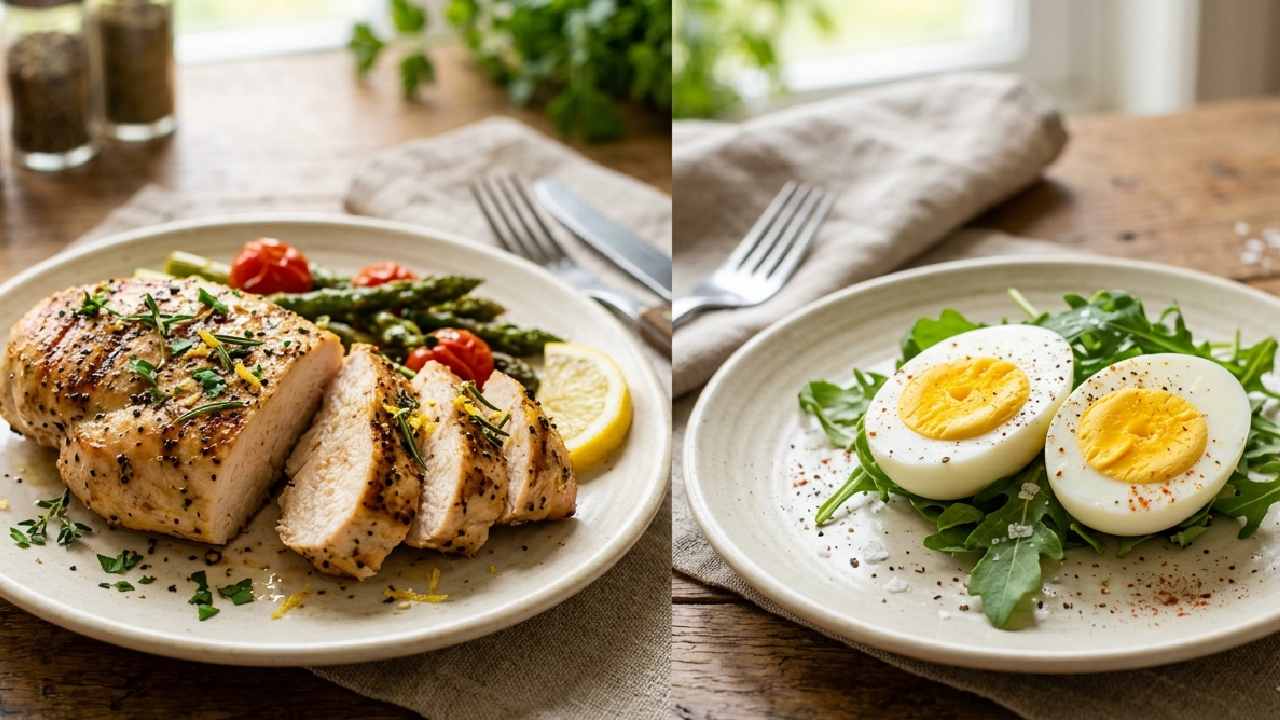

Protein plays a crucial role in any weight-loss journey, but choosing the right source can make a significant difference. Among the most popular high-protein foods, eggs and chicken are both excellent options. However, if the goal is to maximize protein intake while keeping calories and fat under control, lean chicken breast has a slight advantage.
According to nutritional data from the U.S. Department of Agriculture (USDA), 100 grams of skinless chicken breast provides approximately 31 grams of protein, 165 calories, and only 3.6 grams of fat. In comparison, two boiled eggs (roughly 100 grams) contain around 12.6 grams of protein, 155 calories, and 10.6 grams of fat. While the calorie difference is relatively small, chicken delivers more than twice the protein with significantly less fat.
Eggs, however, remain a nutritional powerhouse. They are rich in vitamins A, D, E, and B12, along with choline, an essential nutrient that supports brain function. Eggs also contain antioxidants such as lutein and zeaxanthin, which contribute to maintaining healthy eyesight. These nutrients make eggs an important part of a balanced diet despite their lower protein content.
Chicken is an excellent source of vitamins B3 and B6, phosphorus, and selenium, nutrients that support metabolism, immunity, and muscle health. Fitness enthusiasts and individuals aiming to build lean muscle often include chicken breast as a staple in their meal plans.
Nutrition experts emphasize that the best approach is not choosing one over the other but maintaining a balanced diet. Eating eggs in one meal and lean chicken in another can help meet daily protein needs while providing a wide range of essential nutrients for healthy and sustainable weight management.