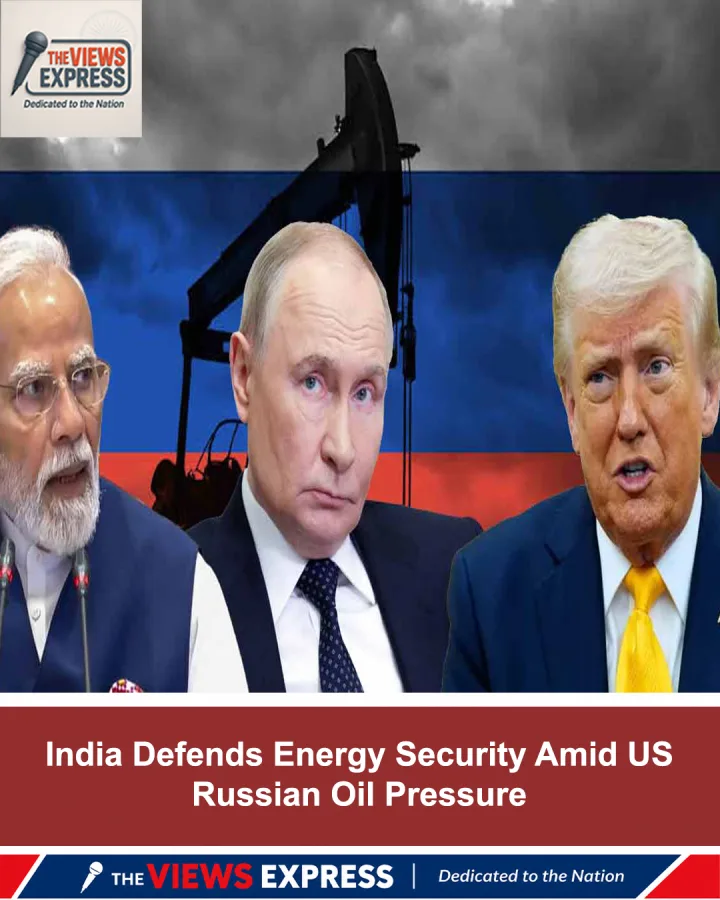
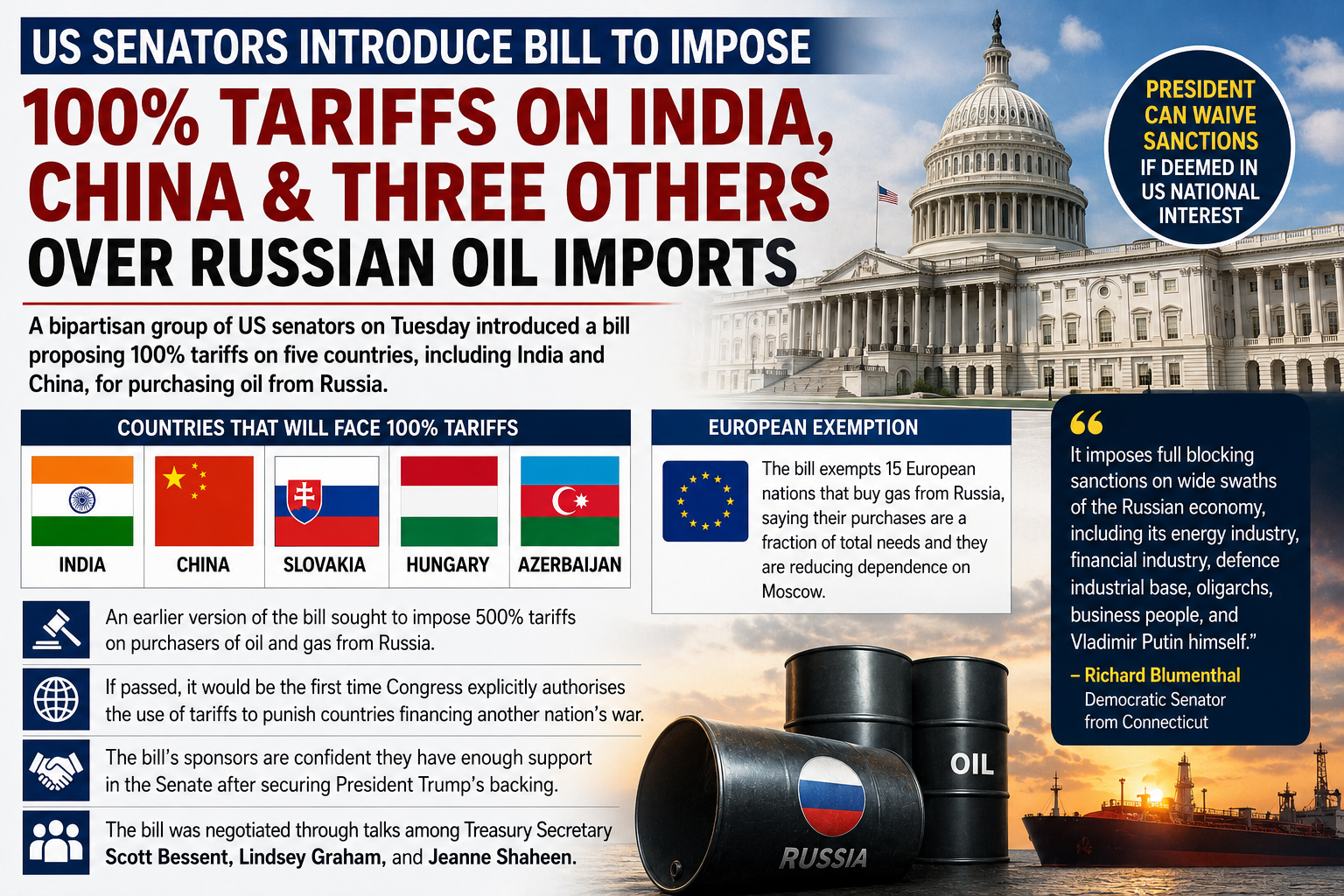
Washington, D.C.: As per news reports, a bipartisan group of US senators on Tuesday introduced legislation proposing 100% tariffs on imports from five countries—including India and China—for continuing to purchase Russian oil, marking a significant escalation in Washington's efforts to curb Moscow's energy revenues amid the ongoing Ukraine conflict.
The proposed legislation, spearheaded by Republican Senator Lindsey Graham and supported by Democratic Senator Richard Blumenthal, represents a revised version of an earlier proposal that had sought to impose 500% tariffs on countries importing Russian oil and gas. The updated bill reduces the tariff rate to 100% while granting the US President the authority to waive the sanctions if deemed to be in the country's national interest. Besides India and China, the proposed tariffs would also apply to Slovakia, Hungary, and Azerbaijan, all of which continue to import Russian energy.
The bill, however, exempts 15 European countries that still purchase limited quantities of Russian natural gas. According to its sponsors, these nations rely on Russia for only a small portion of their energy needs and are actively working to reduce their dependence on Moscow.
Speaking to reporters, Senator Richard Blumenthal said the legislation extends far beyond tariffs.
"It's been referred to as a tariffs bill, but actually it imposes full blocking sanctions on wide swaths of the Russian economy, including its energy industry, financial industry, defence industrial base, oligarchs, business people, and Vladimir Putin himself," he said.
The United States has previously attempted to discourage purchases of Russian energy through trade measures. Last year, Washington imposed an additional 25% tariff on certain Indian imports as a response to New Delhi's continued purchases of Russian crude oil. Those duties were subsequently withdrawn in February. If enacted, the legislation would mark the first time the US Congress has explicitly authorised the use of tariffs as a tool to penalise countries accused of financing another nation's war effort through energy trade.
According to a Senate aide, the bill's sponsors believe they have secured sufficient bipartisan backing to pass the Senate following discussions with the White House. However, no timeline has yet been announced for bringing the legislation to a floor vote.
The measure was negotiated through discussions involving Treasury Secretary Scott Bessent, Senator Lindsey Graham, and Democratic Senator Jeanne Shaheen, reflecting close coordination between congressional leaders and the Trump administration on the proposed sanctions package.
The bill is expected to intensify diplomatic and trade concerns among major importers of Russian oil, particularly India and China, while adding a new dimension to the United States' strategy of increasing economic pressure on Russia over the war in Ukraine.