
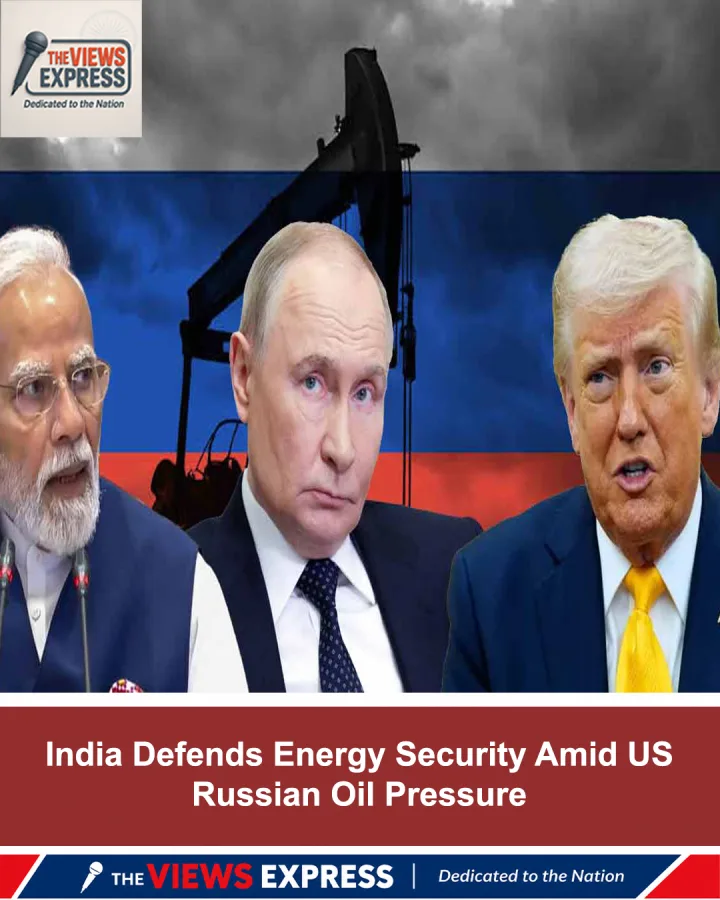

India has reaffirmed its commitment to energy security after the US Congress passed legislation giving President Donald Trump authority to impose tariffs of up to 100 percent on countries purchasing Russian oil and gas. New Delhi has indicated that it will continue sourcing crude from diversified suppliers based on market conditions and domestic requirements.
The Lindsey O. Graham Sanctioning Russia and Iran Act of 2026 passed the US Senate by 86-11 on August 7 and cleared the House of Representatives by 262-159 on September 16. The legislation now awaits presidential action. Importantly, the measure does not automatically impose a 100 percent tariff on India; it provides the US president with authority to introduce such penalties under the legislation.
India’s Ministry of External Affairs said the government would take necessary measures to protect the country’s trade and economic interests while ensuring fuel supplies for its 1.4 billion people. New Delhi has also warned that punitive action against Russian energy buyers could affect bilateral relations and create wider uncertainty in global energy markets.
Russian crude has become an important component of India’s import strategy, particularly since the Ukraine conflict reshaped global energy trade. Industry executives have said replacing Russian supplies completely could be difficult because of limited alternatives and higher costs in current market conditions.
The legislation could therefore add another layer of complexity to India-US trade negotiations. At the same time, India’s continued emphasis on diversified sourcing leaves room for adjustments depending on international prices, supply availability and future US policy decisions.