
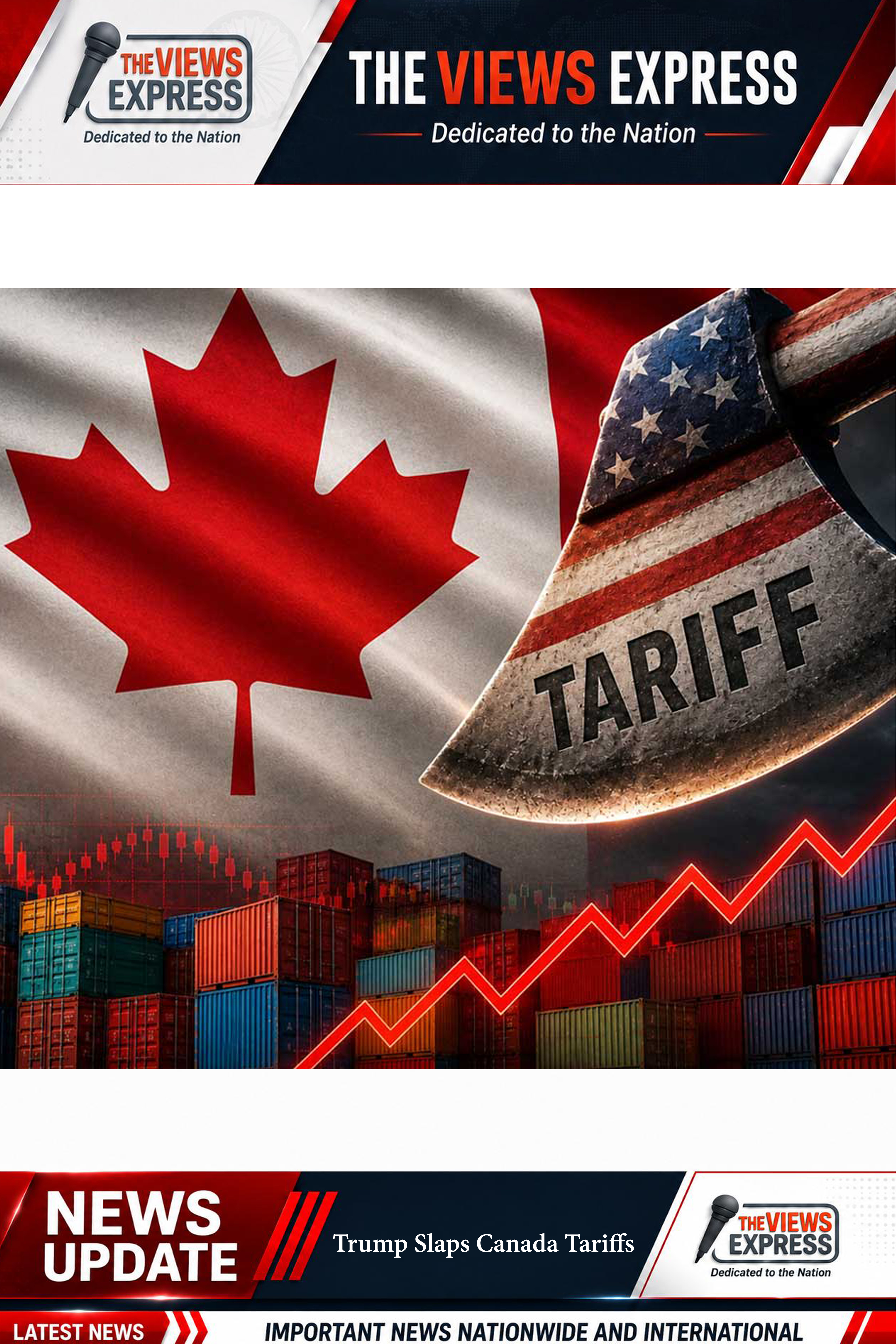

US President Donald Trump has announced a sweeping 50 percent tariff on most imports from Canada, significantly escalating trade tensions between the two neighboring countries. The White House said the decision was taken in response to what it described as discriminatory trade practices against American products by the Canadian government.
The new tariffs have reportedly been introduced under Section 338 of the US Trade Act of 1930, a provision that allows the United States to impose retaliatory duties on countries accused of unfair treatment of American commerce. The administration has identified multiple sectors that will face the higher tariffs, marking one of the strongest trade actions against Canada in recent years.
Senior US officials also suggested that Canada's decision to impose retaliatory tariffs on American goods played a major role in Trump's latest move. According to the administration, Canada was among the few countries, after China, to respond aggressively to previous US tariff measures, prompting Washington to take tougher action.
Despite the broad tariff hike, several key products have been exempted from the measure. Energy products, potash, seafood, and certain critical minerals will continue to receive preferential treatment due to their strategic importance to the US economy.
The announcement comes after the expiration of the United States-Mexico-Canada free trade framework, raising concerns about the future of North American trade relations. Economists warn that the new tariffs could increase costs for businesses, disrupt supply chains, and place additional pressure on Canada's export-driven economy.
The decision is expected to trigger strong diplomatic reactions and may further deepen trade uncertainty between the United States and Canada.