
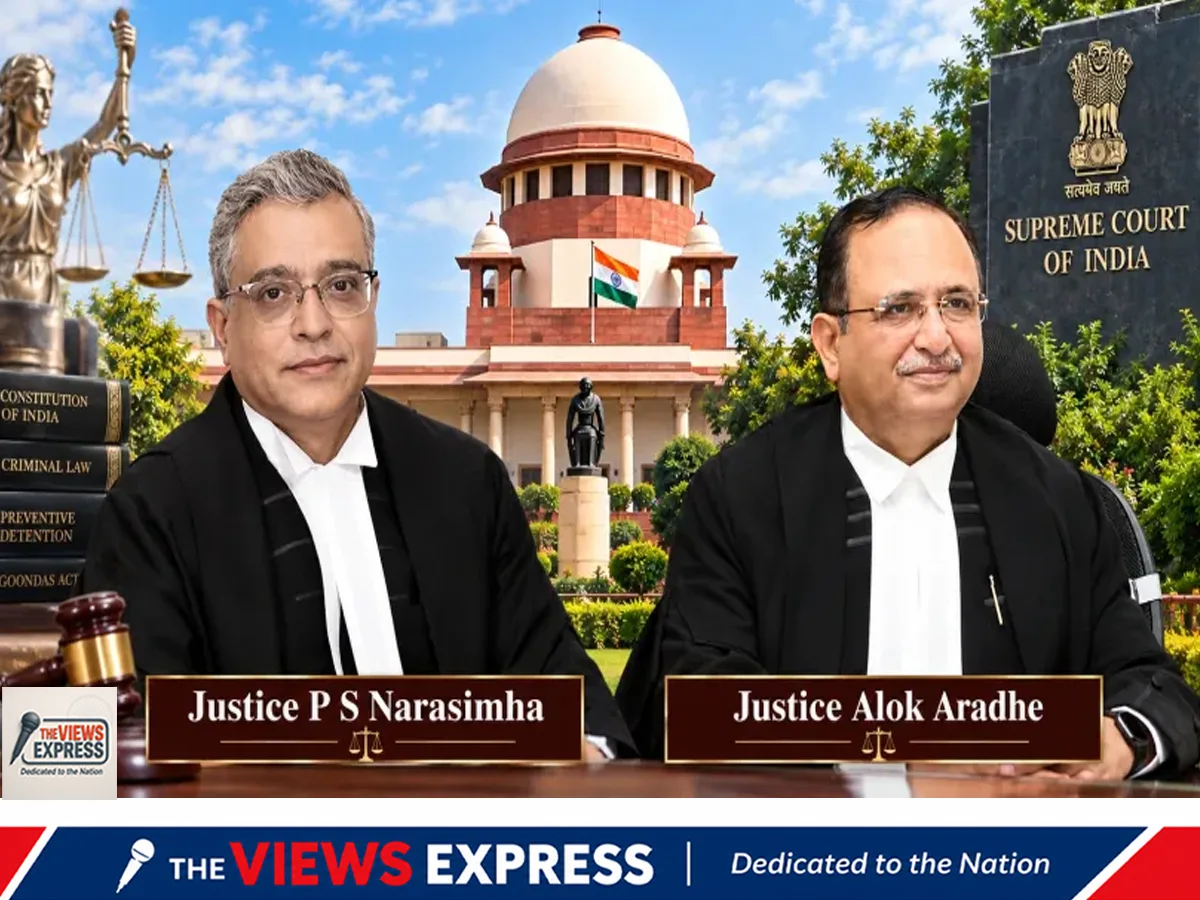

The Supreme Court has questioned the continued relevance of laws that disqualify people with more than two children from contesting local body elections. Citing India’s declining fertility rate, the Court has referred its 2003 judgment in Javed v State of Haryana to a larger bench for reconsideration.
A bench of Justices P S Narasimha and Alok Aradhe made the observations while hearing a case filed by Mangala Bhimrao Ingle, a former sarpanch of Kakoda Gram Panchayat in Maharashtra. She had been disqualified under the Maharashtra Village Panchayats Act, 1959, after the birth of her third child.
The Court noted that India’s total fertility rate has fallen from around 3 in 2003 to 1.9 now. This is below the replacement level of 2.1, which is the rate at which one generation replaces itself. The judges observed that the population-related concerns behind the two-child restrictions have changed and questioned whether such laws remain justified.
The bench also expressed concern that these rules could prevent a section of citizens from participating in local democratic institutions and affect their reproductive autonomy under Article 21 of the Constitution.
The Supreme Court set aside Ingle’s disqualification and referred the wider legal question to a larger bench. However, this does not mean that all two-child restrictions across India have been struck down. The legal position in individual states will depend on the laws in force and the outcome of the larger-bench hearing.
According to the state-wise information cited in the case, similar provisions continue in Assam, Goa, Gujarat, Maharashtra, Odisha and Uttarakhand. Voters and prospective candidates should check the rules applicable in their state before drawing conclusions.