
The Reserve Bank of India (RBI) has announced plans to introduce polymer banknotes on a pilot basis beginning in the next financial year, marking a significant step toward improving the durability and efficiency of India's currency system. RBI Governor Sanjay Malhotra shared the update while presenting the central bank's latest monetary policy review.
According to the RBI, polymer banknotes are far more durable than conventional paper currency and can remain in circulation for significantly longer. Many countries have successfully used polymer notes for decades because they resist tearing, moisture, dirt, and general wear much better than traditional paper notes.
The central bank has already initiated the tendering process for the specialized polymer material required to manufacture the new currency. Once production begins, the notes will undergo field trials and security evaluations before any wider rollout is considered.
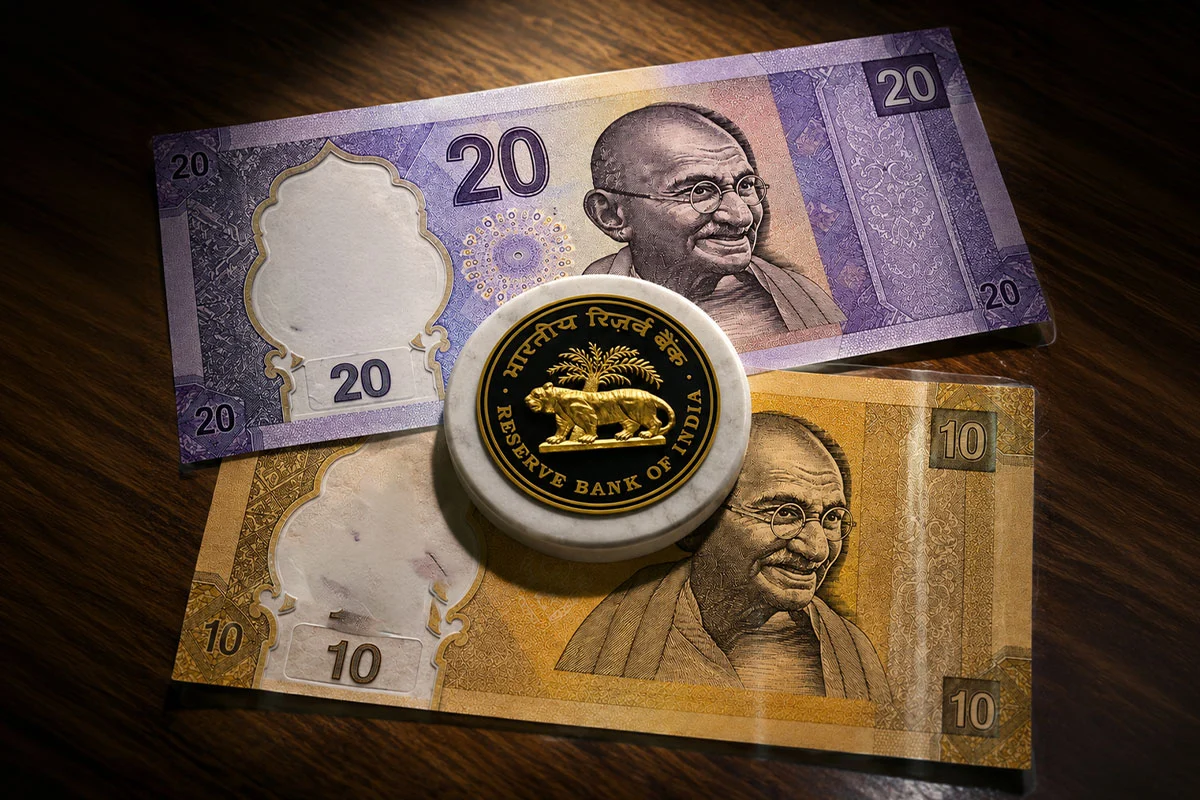
As part of the pilot project, the RBI has received approval to issue one billion ₹10 polymer notes and one billion ₹20 polymer notes for testing. These denominations were selected because they are among the most frequently used currency notes in daily transactions, allowing authorities to evaluate their performance under real-world conditions.
The RBI has clarified that the introduction of polymer notes will not replace existing paper currency immediately. Current paper notes will continue to remain legal tender and circulate alongside the new polymer versions during the trial phase.
Officials believe polymer notes could reduce long-term printing and replacement costs due to their extended lifespan, estimated to be up to four times longer than paper notes. If the pilot proves successful, the RBI may gradually expand polymer currency to additional denominations in the future.