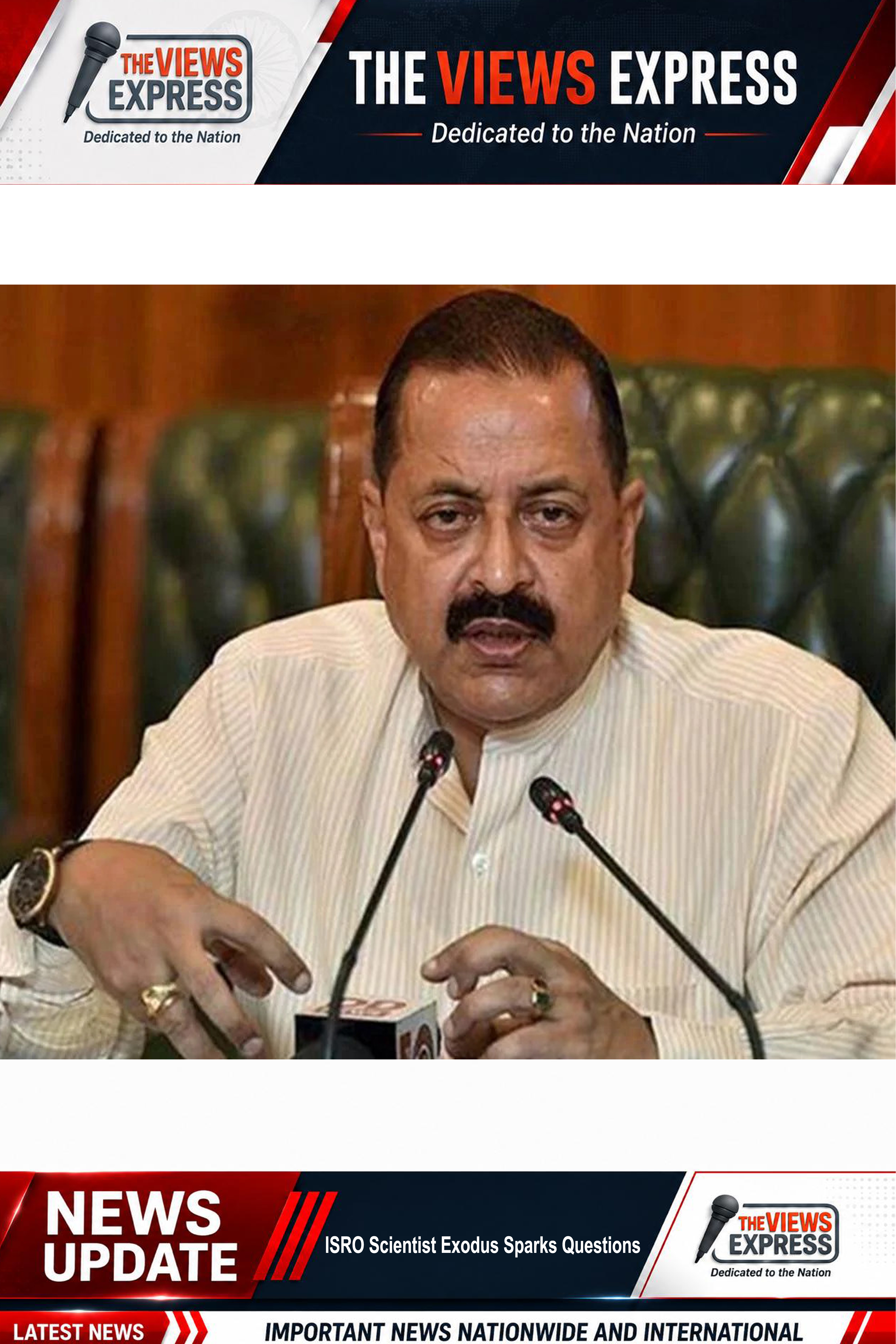

The reported voluntary retirement of nearly 100 scientists from the Indian Space Research Organisation (ISRO) has sparked debate over its potential impact on India's ambitious space programmes, including the Gaganyaan human spaceflight mission. However, Union Minister for Science and Technology Jitendra Singh has dismissed concerns, stating that employee movement within the organization is a routine administrative matter.
Among those who reportedly stepped down is senior scientist Victor Joseph T., who served as Project Director for the Geosynchronous Satellite Launch Vehicle Mark-III (GSLV Mk-III) programme at the Vikram Sarabhai Space Centre. The departure of experienced scientists has raised questions about whether key missions could face delays or operational challenges.
Responding to criticism, Jitendra Singh said ISRO employs a large workforce and that personnel joining and leaving the organization is not unusual. He maintained that there was nothing extraordinary about the recent retirements and attributed the government's revised resignation policy to administrative requirements rather than any specific crisis.
The Centre has, however, introduced new guidelines restricting the acceptance of voluntary retirement applications from Group-A scientists and technical personnel associated with critical national missions such as Gaganyaan. Under the revised framework, directors of individual ISRO centres will no longer have the authority to approve such resignations. Instead, the Department of Space will make the final decision.
Government officials have stated that the policy change aims to prevent disruptions to strategically important projects and safeguard national interests. The move has nevertheless prompted fresh discussions over talent retention, workforce management, and the long-term sustainability of India's expanding space programme as it prepares for several high-profile missions.