For nearly a century, the FIFA World Cup has celebrated sporting excellence, unforgettable moments, and footballing legends. Yet behind the spectacle, historians have long pointed to another recurring theme—the use of the tournament by powerful authoritarian leaders to strengthen political influence, project national prestige, and shape public perception.
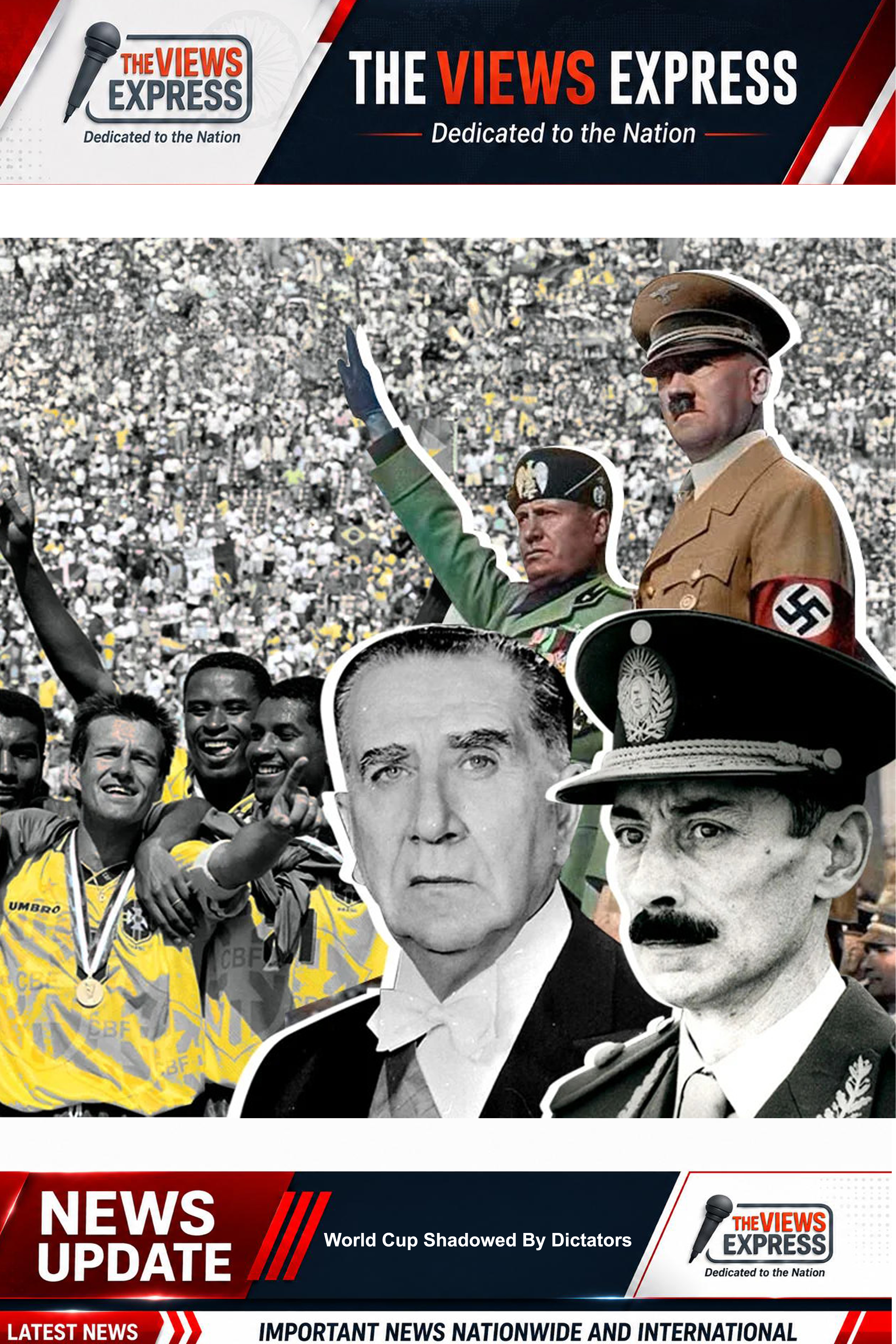
One of the earliest examples came in 1934, when Italian dictator Benito Mussolini hosted the World Cup. His government invested heavily in infrastructure, propaganda, and public campaigns while portraying Italy's triumph as proof of fascist strength. Reports and historical accounts have also described intense pressure placed on players and officials during the tournament.
Adolf Hitler similarly viewed football as a vehicle for promoting Nazi ideology. Following Germany's annexation of Austria in 1938, Austrian players were absorbed into the German squad as the regime attempted to showcase so-called Aryan superiority. Germany's early elimination, however, undermined those ambitions.
Decades later, Brazil's military ruler Emílio Garrastazu Médici embraced the national team's 1970 World Cup success as a symbol of unity during a period marked by political repression. In Zaire, Mobutu Sese Seko invested heavily in football but reportedly threatened players after disappointing performances at the 1974 World Cup.
Argentina's 1978 World Cup remains one of the most debated tournaments in football history. Military ruler Jorge Videla celebrated the country's victory while his regime faced widespread allegations of human rights abuses.
More recently, global tournaments hosted by countries including Russia and Qatar have sparked renewed debate over how major sporting events can enhance international image, demonstrating that football's biggest stage often carries political significance far beyond the game itself.