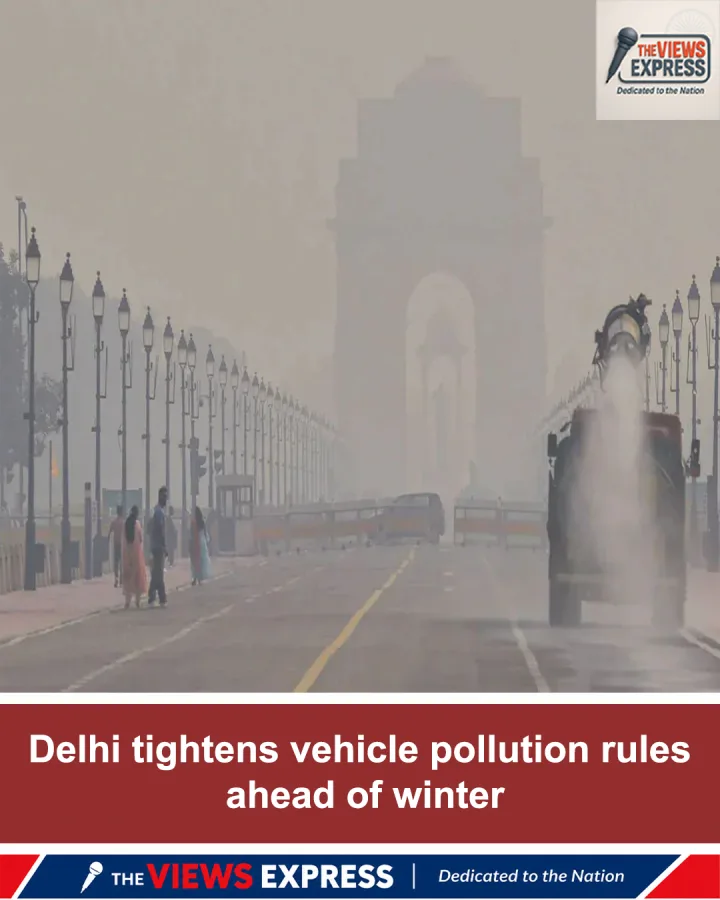

Delhi is preparing for another winter pollution season with stricter measures targeting vehicle emissions and other major sources of air pollution. From October 1, vehicles across Delhi-NCR without a valid Pollution Under Control certificate will not be allowed to purchase fuel at petrol and CNG stations. The Commission for Air Quality Management has directed authorities to enforce the rule, with automatic number-plate recognition systems being used at fuel stations to identify vehicles and verify compliance.
The measure is part of a wider winter pollution strategy. Delhi’s government has announced restrictions on the entry of older vehicles registered outside the capital. From November 1, non-Delhi registered petrol and diesel vehicles below the BS-VI emission standard are to be barred from entering the city, while CNG and electric vehicles are exempt from this particular restriction.
The government has also outlined measures involving public transport, road dust, construction activity, waste burning and industrial emissions. A 50% work-from-home arrangement for government and private offices is planned from November 1, while parking charges at authorised sites will be doubled, excluding Metro parking facilities. Restrictions on construction and demolition will become progressively stricter during the peak winter months.
The “No PUC, No Fuel” policy is intended to improve compliance with vehicle-emission standards before the most pollution-prone period begins. However, experts have noted that the conventional PUC test has limitations because it does not measure several pollutants, including nitrogen oxides and fine particulate emissions from vehicles.
With Delhi’s winter air quality affected by transport, industry, dust, biomass burning and other sources, authorities are preparing a multi-sector response rather than relying on vehicle restrictions alone.