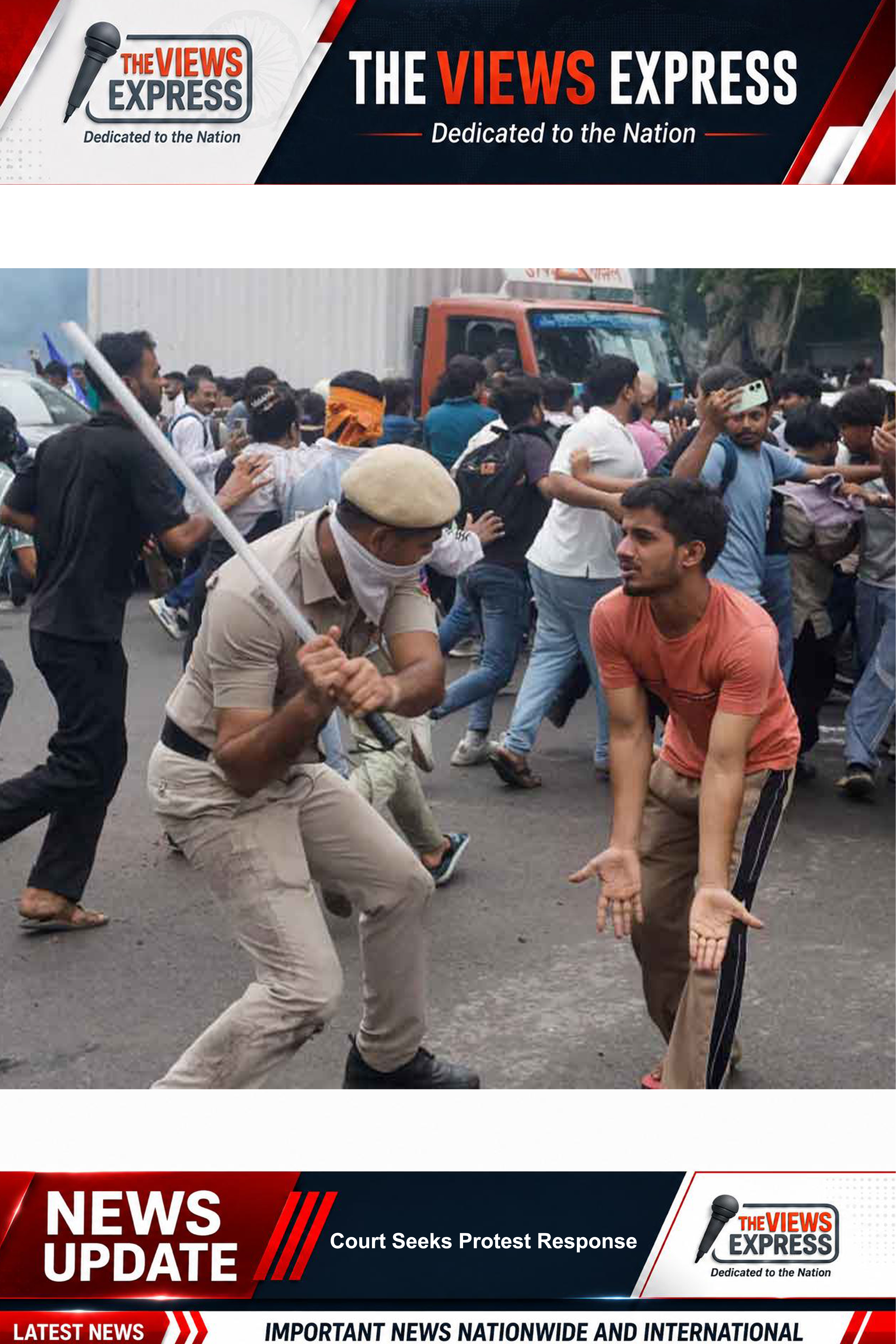

The Delhi High Court has directed the Central Government and Delhi Police to file their responses within four weeks regarding allegations of excessive force during the Cockroach Janata Party's (CJP) Parliament march held on July 20. The court also instructed authorities to preserve all CCTV footage, videography, and related records connected to the protest.
The demonstration was organized to protest alleged corruption in the education system and the NEET examination paper leak controversy. Thousands of protesters gathered near Parliament after weeks of continuous demonstrations at Jantar Mantar. Education activist Sonam Wangchuk, who has been observing a hunger strike demanding the resignation of Union Education Minister Dharmendra Pradhan, also extended support to the movement.
A bench led by Chief Justice D.K. Upadhyaya and Justice Tushar Rao Gedela took up two public interest litigations alleging that police used disproportionate force against peaceful demonstrators. Petitioners claimed officers carried batons fitted with metal nails, resorted to lathi-charge on women and children, and that some plainclothes personnel participated in the crackdown. Additional allegations included claims that a senior Delhi Police officer assaulted a woman protester without provocation.
Senior advocates representing the petitioners argued that the protesters were exercising their constitutional right to peaceful assembly and that the police response violated fundamental rights.
Appearing for the Centre, Additional Solicitor General S.V. Raju denied allegations of police brutality and argued that any injured individual should file separate complaints with police or a magistrate. The High Court rejected that argument, observing that the matter concerns broader public interest rather than isolated individual grievances.
The case will be heard again on September 11, when both the Centre and Delhi Police are expected to submit detailed affidavits before the court.