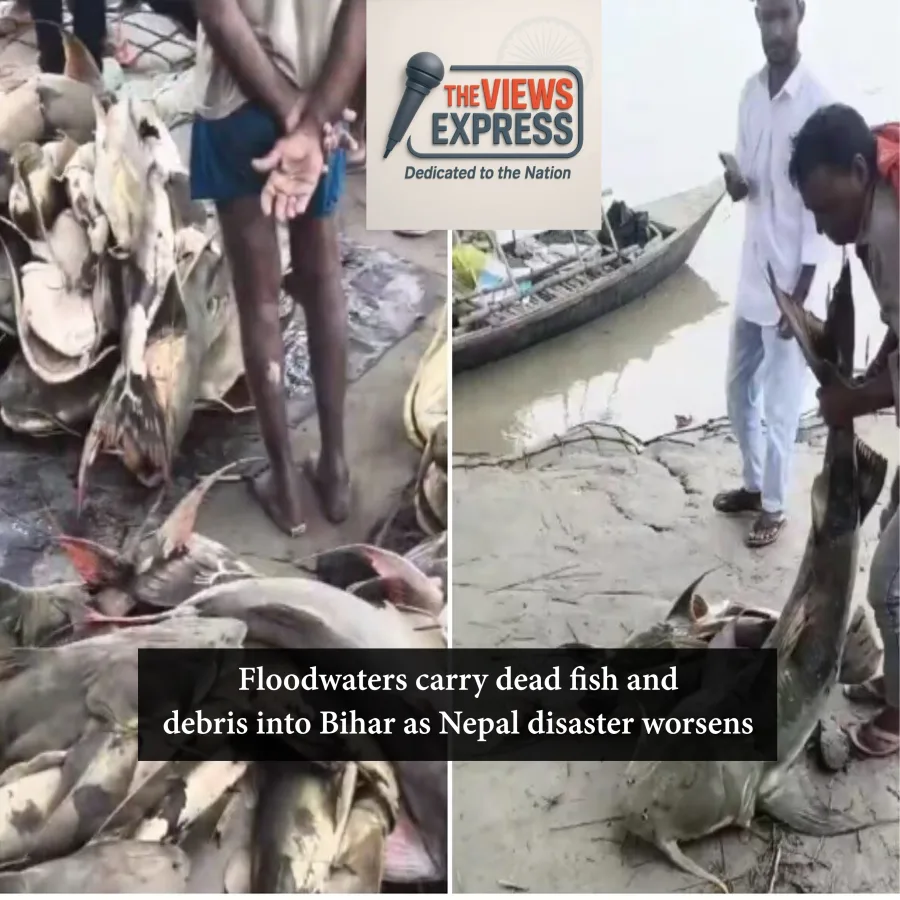

Bihar authorities have advised people not to catch, sell or consume fish carried into the state by floodwaters from Nepal, citing potential health risks. The advisory follows a rise in water levels in rivers connected to Nepal’s Trishuli River and reports of unfamiliar fish species appearing in Bihar.
Floodwaters from the Trishuli have mixed with the Kali Gandaki, which enters Bihar as the Gandak. The Koshi and Gandak rivers have also recorded increased water levels following the flash floods in Nepal. Dead fish, mud, silt and other debris have reportedly been carried downstream into Bihar.
The state Animal and Fisheries Resources Department has urged residents to avoid eating unidentified fish until the situation returns to normal. Officials warned that fish exposed for prolonged periods to contaminated sewage, dead animals and other pollutants could carry harmful bacteria or viruses.
Residents have also been advised to report unfamiliar fish to local authorities and avoid using river water for domestic activities. Anyone falling ill after consuming flood-borne fish has been urged to seek medical attention immediately.
Health experts have warned that floodwater contamination could also affect wells and tube wells, increasing the risk of diarrhoeal diseases, cholera and typhoid. Stagnant water may further contribute to mosquito-borne diseases such as dengue and malaria.
Several districts bordering Nepal, including West and East Champaran, Sitamarhi, Kishanganj and Purnia, have been placed under increased vigilance. Authorities have also reported elevated iron levels in water sources across seven border districts.
Meanwhile, Nepal’s disaster situation remains severe. According to Nepal Police, 1,127 bodies had been recovered by Wednesday morning following the August 26 flash floods, while 4,858 people remained missing. Rescue and recovery operations are continuing.