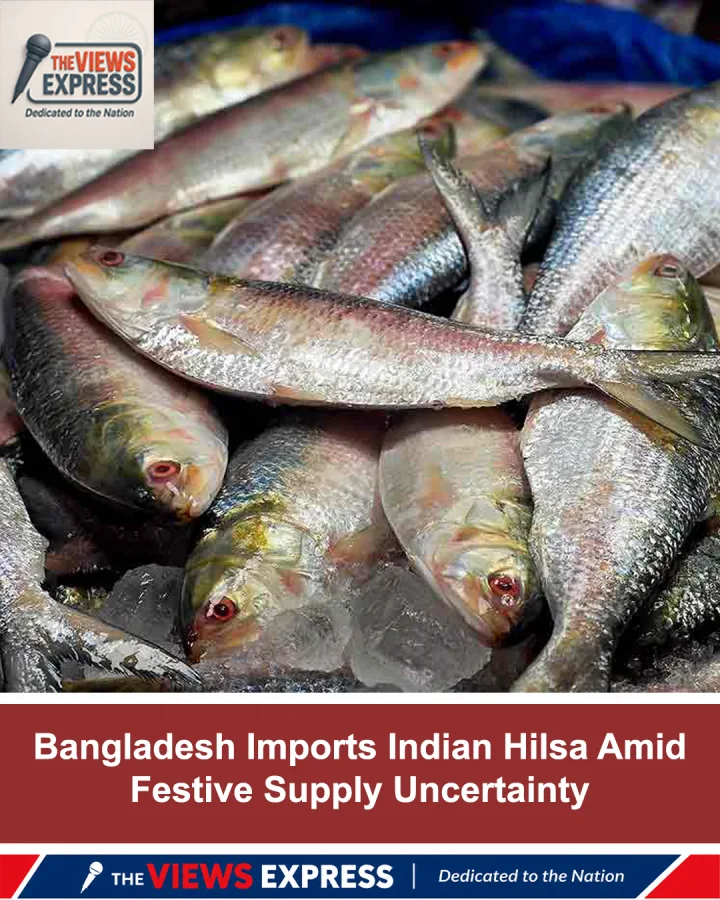

In a remarkable reversal of tradition, Bangladesh has imported around 500 metric tonnes of hilsa from India over the past two months. The development comes at a time when hilsa production in Bangladesh has reportedly declined, raising questions about whether the much-awaited Padma hilsa will reach Bengali households during this year’s Durga Puja.
Bangladesh is considered the world’s leading hilsa-producing country, accounting for nearly 70 to 80 percent of global catches. However, declining domestic availability has reportedly forced Bangladeshi fish traders to look towards India to meet rising demand.
Much of the imported hilsa has reportedly come from Gujarat, particularly through Bharuch port. Fish consignments have also been sourced from Howrah’s wholesale fish market. According to traders, Gujarat has a greater supply of roe-filled hilsa, which is especially popular in Chattogram and Sylhet.
The imported fish is reportedly being processed and exported to other countries. Some hilsa is also being dried and sold as salted fish in Bangladesh’s local markets. Hilsa roe is reportedly being sold separately, reflecting the strong demand for the delicacy.
The development is particularly significant because Bangladesh has traditionally sent limited quantities of hilsa to India as a Durga Puja gesture since 2019. Exports declined further after the pandemic. Last year, Bangladesh approved the export of 1,200 tonnes of hilsa to India, but only 143.80 tonnes reportedly arrived.
With Bangladesh’s new government yet to clarify its hilsa export policy, uncertainty continues over this year’s supply. Indian fish traders have already approached Bangladesh’s fisheries authorities, but the arrival of Padma hilsa remains unclear. Will Bengali kitchens receive their traditional festive delicacy this Puja?