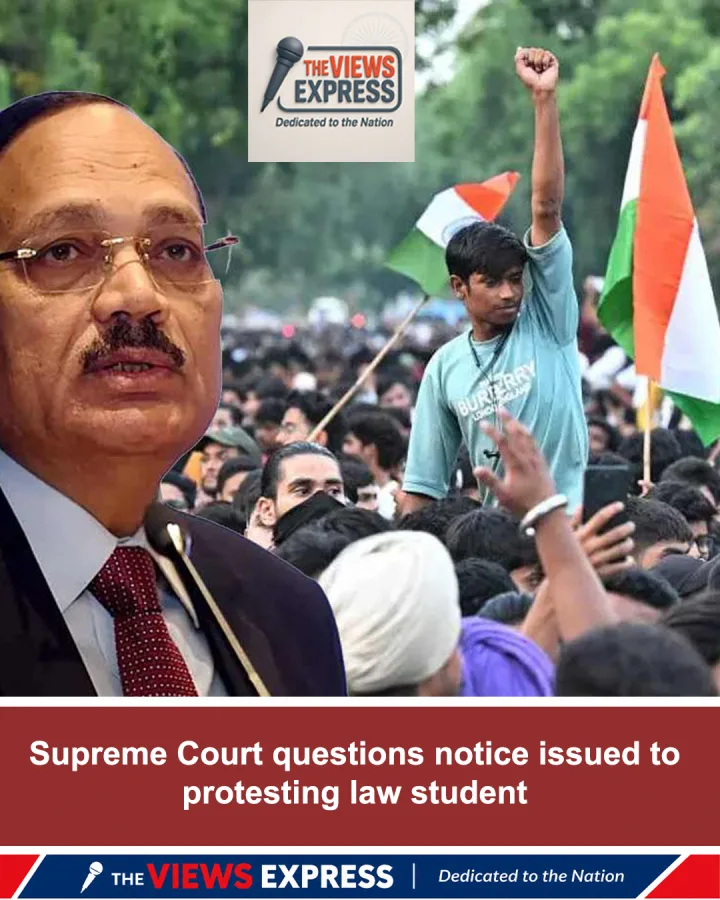

The Supreme Court has strongly criticised an executive magistrate in Greater Noida for issuing a notice to a 20-year-old law student over his alleged participation in an anti-government protest in Delhi.
The student, Akshat Tripathi of Gautam Buddha University, had reportedly participated in a protest organised by the Cockroach Janata Party (CJP) at Jantar Mantar and encouraged fellow students to join. A notice was subsequently issued on September 4, accusing him of promoting anti-government activities and allegedly instigating classmates to participate in the demonstration.
The matter was brought before a bench headed by Chief Justice Surya Kant. The Chief Justice questioned the authority of the executive magistrate to issue such a notice, observing that the action appeared to contradict an earlier Supreme Court direction.
The court had previously directed that coercive action should not be taken against students in connection with specified protests. It had also indicated that fresh FIRs should not be registered over the demonstrations covered by its order.
Although the notice was withdrawn the following day, the Supreme Court has sought explanations from the concerned magistrate and the district magistrate over how such an order was issued.
The Chief Justice reportedly expressed surprise that an executive authority could issue a notice despite the court’s explicit directions. The development has once again highlighted the limits of executive powers and the judiciary’s scrutiny of police and administrative action involving students and peaceful protest.
The case could have wider implications for the protection of students’ rights and freedom of expression during demonstrations.