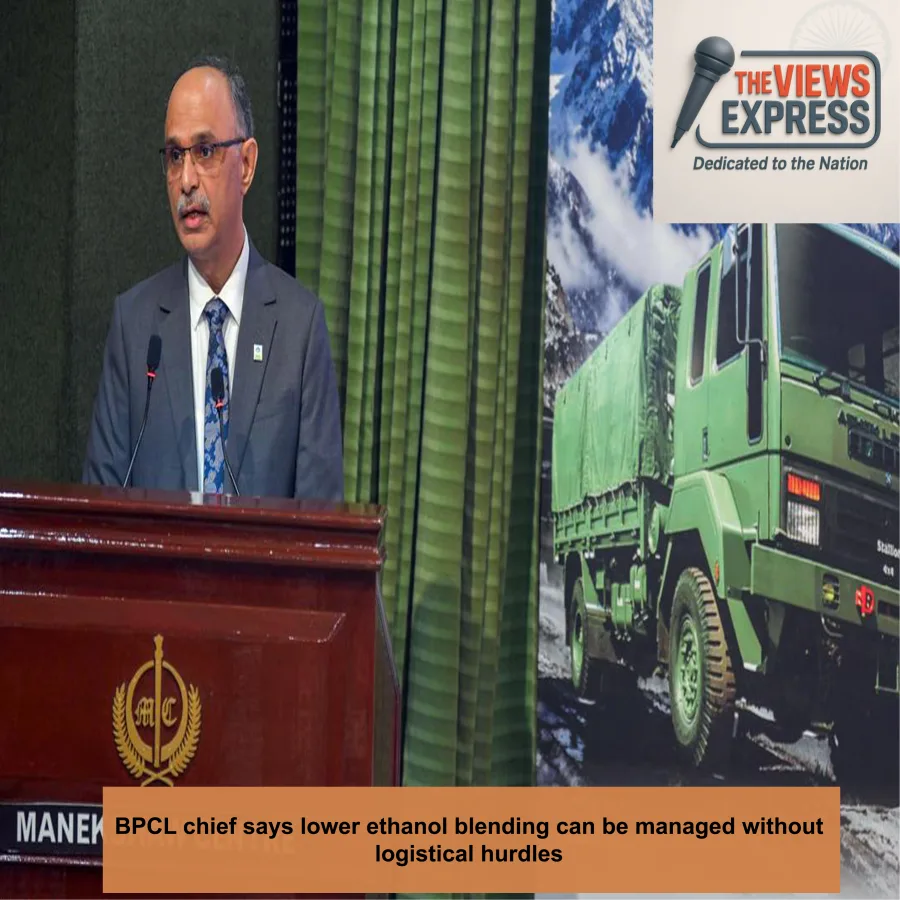

Bharat Petroleum Corporation Limited (BPCL) Chairman and Managing Director Sanjay Khanna has said that introducing petrol with a lower ethanol blend would not create significant logistical challenges for the country’s fuel distribution system.
His comments come amid an ongoing debate over ethanol blending in petrol and its impact on consumers, vehicle performance and the country’s fuel supply infrastructure. Ethanol is blended with petrol as part of India’s efforts to reduce dependence on imported crude oil, lower carbon emissions and support domestic agricultural producers.
According to the BPCL chief, oil marketing companies have the necessary infrastructure and distribution capabilities to manage changes in ethanol-blended fuel specifications. A lower blending percentage, if required, could therefore be implemented without major disruptions to transportation, storage or retail operations.
The issue has gained attention as India continues to expand its ethanol programme. While higher ethanol blending has been promoted as an important component of the country’s energy strategy, concerns have also emerged over compatibility with older vehicles, fuel availability and regional differences in ethanol supply.
BPCL, one of India’s largest fuel retailers, operates an extensive network of refineries, fuel terminals and retail outlets across the country. The company’s assessment suggests that adjustments to ethanol blending levels can be accommodated within the existing fuel distribution framework.
The government has been encouraging greater use of domestically produced ethanol to reduce the nation’s oil import bill and strengthen energy security. However, any change in blending policy is expected to take into account fuel quality, consumer interests, vehicle compatibility and the availability of ethanol.
The BPCL chief’s remarks could add to the discussion over India’s future ethanol blending strategy.