
India has simplified its visa system, making it easier for foreign nationals to visit the country for medical treatment, tourism, education and business. The Union Home Ministry has reduced the number of main visa categories from 13 to nine and sub-categories from 49 to 23.
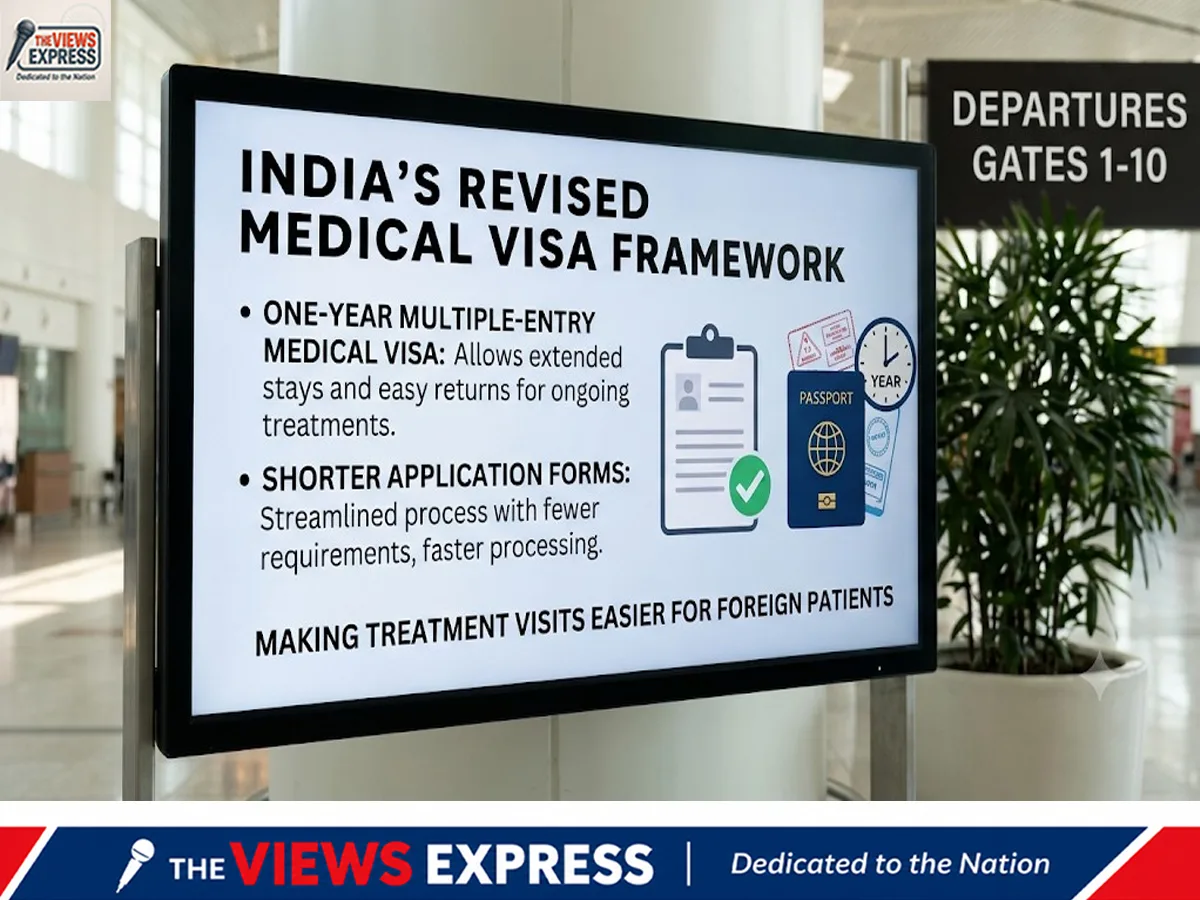
The government has also shortened visa application forms by cutting the number of fields applicants need to fill in by 65–70 per cent. The aim is to reduce paperwork and make the application process faster and easier.
For foreign patients, the revised medical visa system is particularly important. The M-1 visa will cover medical treatment other than AYUSH, while the M-3 visa will be available for treatment under AYUSH systems. Both will ordinarily be granted for one year with multiple entries. Attendants accompanying patients will be eligible for M-2 and M-4 visas, respectively.
Another major change is the renaming of the Tourist Visa as the Visitor Visa. It has two categories. V-1 is meant for short visits and allows multiple entries over 30 days. It also covers medical consultations, short-term treatment, wellness retreats and business meetings. V-2 is meant for longer visits and may be granted for one, five or 10 years, depending on eligibility.
The nine main categories are Business, Diplomatic, Work, Journalist, Medical, Official, Student, Visitor and Miscellaneous.
The changes were announced on August 27, 2026. The Home Ministry is updating its computer systems, and visas under the revised framework are expected to be issued by the end of 2026.
For Kolkata, which receives patients from neighbouring countries, simpler medical visa procedures could make treatment visits easier. However, the actual impact will depend on implementation and the experience of hospitals and patients.