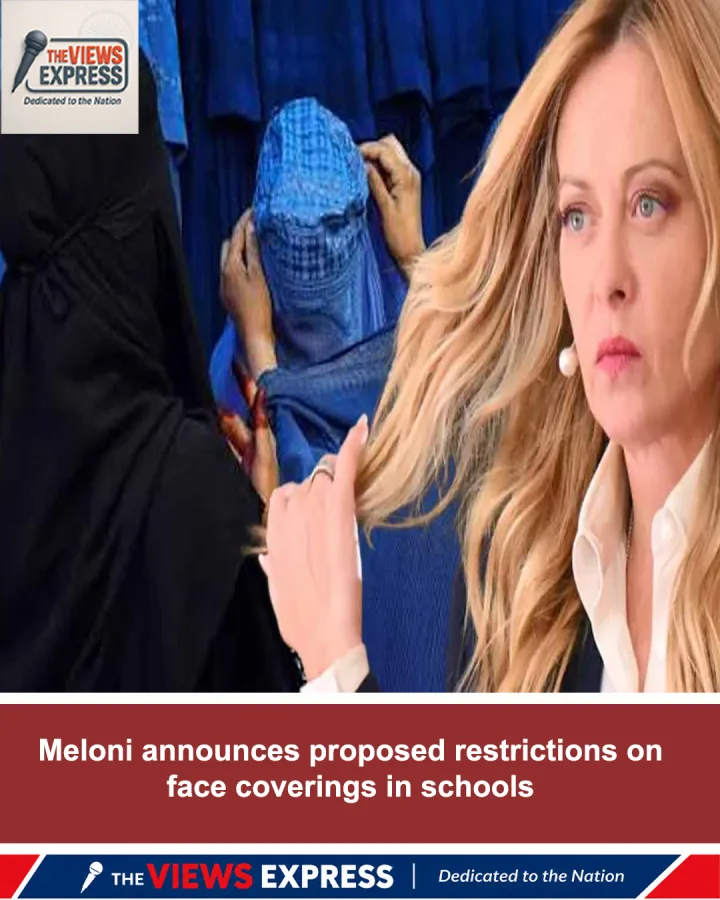
Italy is preparing to introduce restrictions on wearing burqas and niqabs in educational institutions, Prime Minister Giorgia Meloni has announced, placing the issue of face-covering garments and integration at the centre of a fresh political debate.
Speaking at a meeting of her ruling Brothers of Italy party, Meloni said proposals would include banning burqas and niqabs in educational institutions. She also indicated that limits could be introduced on the number of foreign students in Italian schools and that parents of foreign students facing difficulties integrating into the education system could be required to learn Italian.
The proposed measures come amid a broader European debate over face-covering clothing. Countries including France, Germany, Austria, Denmark, Belgium, Bulgaria, Latvia and Switzerland have introduced varying restrictions on face coverings in public spaces or specific settings.
Italy currently does not have a blanket law specifically prohibiting burqas or niqabs in schools or public places. A 1975 law prohibits covering the face or concealing identity without a legitimate reason. In 2008, Italy’s highest administrative court clarified that religious or cultural reasons could justify full-face coverings, while requiring identification when necessary.
Meloni’s announcement also follows campaigning by National Future, a party founded by European Parliament member and retired army general Roberto Vannacci, which has advocated a nationwide burqa ban.
Immigration and integration are expected to remain prominent political issues ahead of Italy’s next parliamentary election. Meloni’s coalition partner, the anti-immigration League, has also previously proposed wider restrictions on face-covering clothing.
The proposed school restrictions will now require further legislative and administrative steps before becoming law.