
Pakistan is facing growing instability on multiple fronts, with separatist violence, militancy, political protests and a deepening economic crisis putting pressure on the government and military establishment.
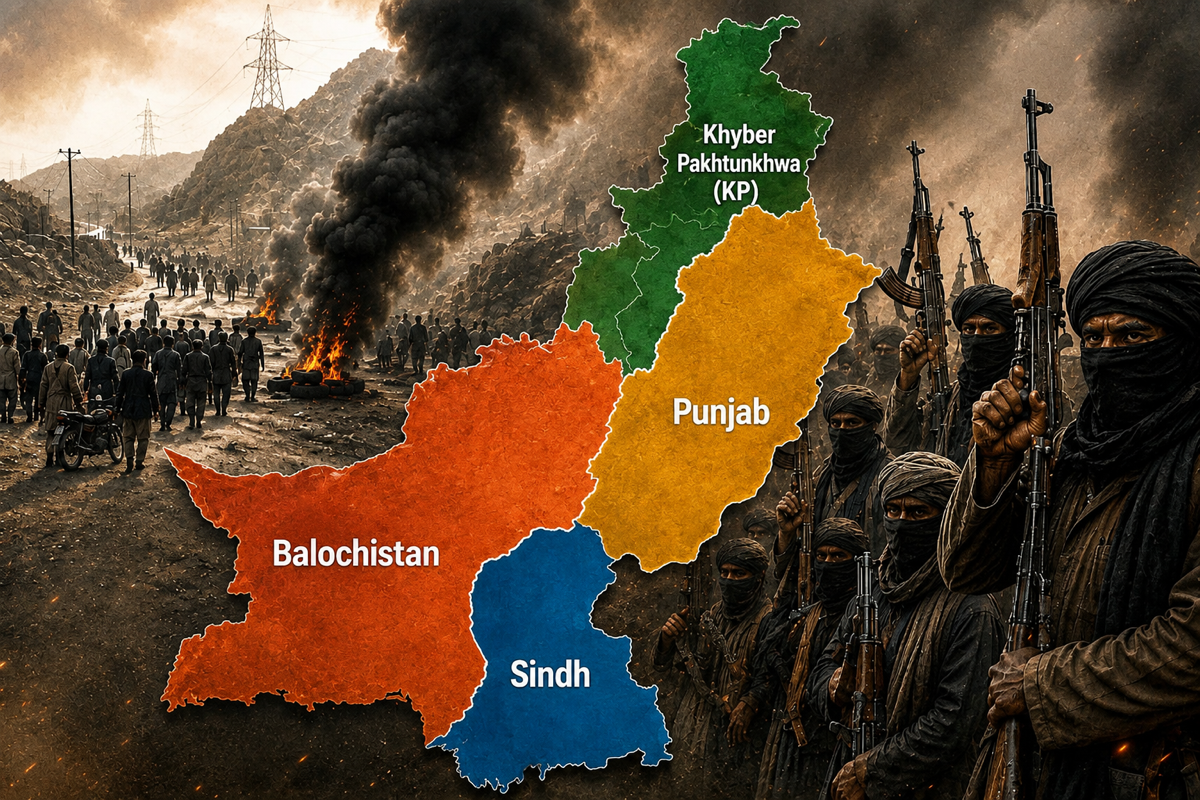
The first major flashpoint is Balochistan, Pakistan’s largest province. Baloch separatist groups, particularly the Baloch Liberation Army (BLA), have intensified their armed campaign against the state. The region has witnessed repeated attacks targeting security forces and other strategic locations, adding to Islamabad’s security challenges.
The second front is Khyber Pakhtunkhwa, where the Tehreek-e-Taliban Pakistan (TTP) remains active. The province’s proximity to Afghanistan and longstanding tribal and political tensions have made it another major security challenge. Pakistan has increasingly struggled to contain militant violence along its western frontier.
The third flashpoint is Pakistan-occupied Kashmir, where public protests have highlighted grievances over governance, political representation, inflation and economic deprivation. The Joint Awami Action Committee has emerged as an important platform for several of these demands, creating further pressure on Islamabad.
The fourth and perhaps most widespread crisis is economic. Pakistan continues to battle heavy debt, inflation, unemployment and dependence on international financial assistance. Concerns over corruption and governance have further intensified public dissatisfaction.
Together, these crises present a serious challenge to Prime Minister Shehbaz Sharif’s government and the country’s powerful military establishment. Analysts are watching closely to see whether Islamabad can restore stability or whether prolonged unrest could trigger major political and constitutional changes in Pakistan.