
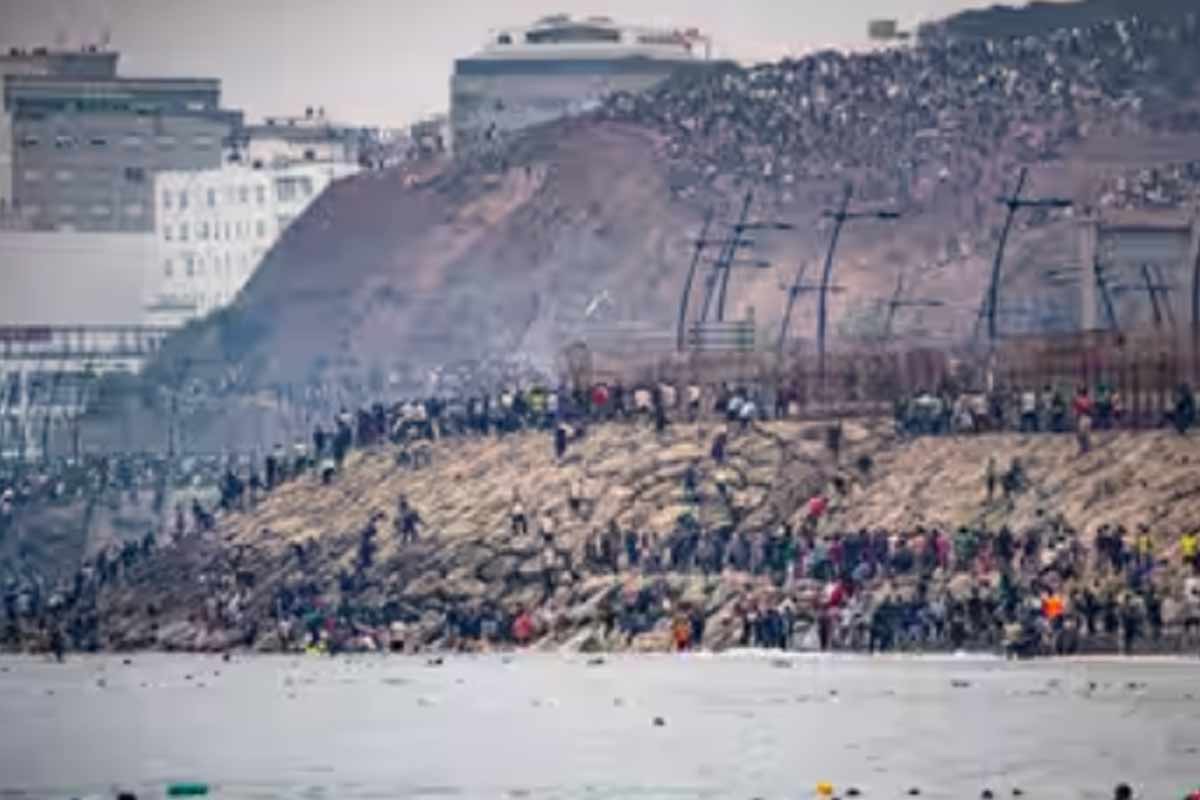

Spain has reported that more than 50,000 migrants have returned to Morocco following a massive attempt to cross into the Spanish autonomous city of Ceuta, while the death toll linked to the dangerous crossings has risen to 57. The humanitarian emergency has drawn international attention as authorities on both sides of the border struggle to manage one of the largest migration surges in recent years.
Ceuta, located on the northern coast of Africa and bordering Morocco, has long served as one of the European Union's only land borders with the African continent. Spanish authorities stated that between Thursday and Friday evening, more than 48,000 migrants entered the territory, while Ceuta's local administration estimated the figure exceeded 60,000 over two days.
As thousands continued gathering near the frontier, Moroccan security forces reportedly used batons and tear gas to disperse crowds and prevent additional crossings. Clashes near the border left several vehicles damaged, while increased deployment of Spanish security forces blocked further movement into Ceuta.
Many migrants who managed to reach the city later returned to Morocco, claiming they lacked access to adequate food, shelter, and essential services. Spanish officials said repatriation efforts have been accelerated in cooperation with Moroccan authorities.
Spanish Prime Minister Pedro Sánchez visited Ceuta during the crisis, describing the mass border crossings as a violation of Spain's territorial sovereignty. He reiterated that Madrid would continue working closely with Morocco to strengthen border management while ensuring humanitarian assistance for those affected.
The unprecedented influx has reignited debate across Europe over migration policies, border security, and the humanitarian challenges posed by large-scale displacement.