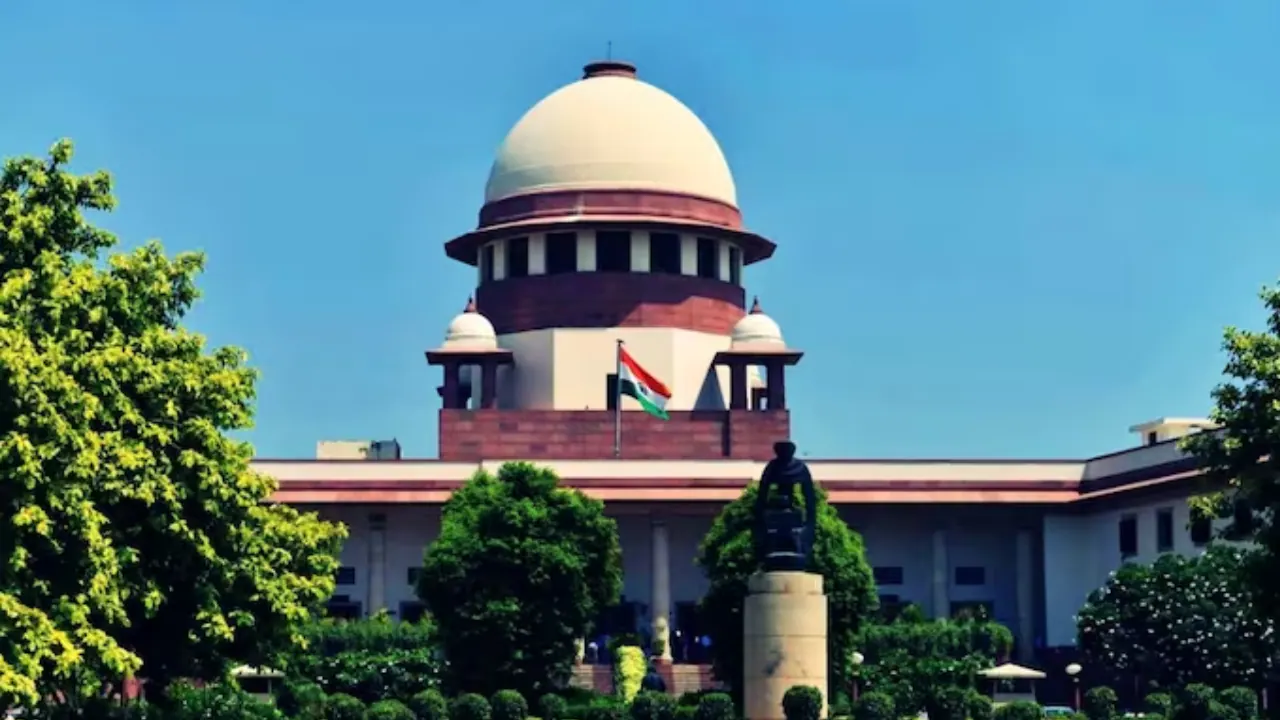
New Delhi: In a rare and sweeping intervention, the Supreme Court on Friday stepped into the politically sensitive process of electoral roll revision in West Bengal, invoking its “extraordinary powers” under Article 142 of the Constitution to ensure the timely completion of the Special Intensive Revision (SIR) of the state’s voter list.
Calling the situation an “extraordinary” breakdown marked by a “trust deficit between two Constitutional functionaries — a democratically elected State Government and the Election Commission,” a bench led by Chief Justice Surya Kant, along with Justices Joymalya Bagchi and Vipul M. Pancholi, ordered the deployment of judicial officers to adjudicate claims and objections over voter inclusion.
The move marks one of the rare instances where the apex court has directly facilitated the electoral roll process to break an administrative deadlock.
Entrusting the Chief Justice of the Calcutta High Court with the responsibility, the bench directed that serving judicial officers, as well as retired district and additional district judges, be appointed to decide claims and objections relating to voters flagged under the category of “logical discrepancy.”
The court made it clear that this step was necessary due to the “non-cooperation” and ongoing blame game between the state government and the Election Commission (EC), which had stalled the revision exercise.
Significantly, the bench rejected the West Bengal government’s contention that Electoral Registration Officers (EROs) should retain the final authority in deciding claims. Instead, it ruled that judicial oversight was essential to restore confidence in the process.
Despite objections from the state government, the Supreme Court permitted the Election Commission to publish 95% of the revised electoral roll on February 28 — the statutory deadline for publication of the final voter list — even as disputed claims continue to be adjudicated.
The bench underscored the importance of adhering to constitutional timelines, warning that failure to complete the SIR exercise could carry serious consequences.
“If SIR is not completed because of some unforeseen reasons, what will be the consequence — the state must realise,” the court observed, in what is being interpreted as a stern message to the Bengal government.
The court’s remarks highlight the depth of the institutional standoff between the state administration and the Election Commission — two constitutional bodies whose coordination is crucial to the integrity of elections.
Legal observers say the invocation of Article 142 — which empowers the Supreme Court to pass any order necessary to do “complete justice” — reflects the gravity of the impasse and the court’s determination to safeguard the electoral process.
With elections looming, the top court’s intervention aims to restore administrative functionality, protect voter rights, and ensure that no eligible citizen is excluded from the democratic exercise.
The coming days will now see judicial officers stepping into an unprecedented role — not merely as arbiters of law, but as custodians of the electoral roll in one of India’s most politically charged states.
The Views Express is a news website, we truely believe in presenting & analysing the news that really matters to the people in general.
: +91 9836903612
: theviewsexpress@gmail.com
info@theviewsexpress.in
Mrinmoy Banerjee - Editor In Chief
Moumita Tarafdar - Managing Editor
Supriyo Mukherjee - Associate Editor
Anindya Das - Associate Editor (Honorary)
Copyright © 2024 The Views Express, All Rights Reserved. Developed by PRIGROW


.webp)
.webp)
.webp)